
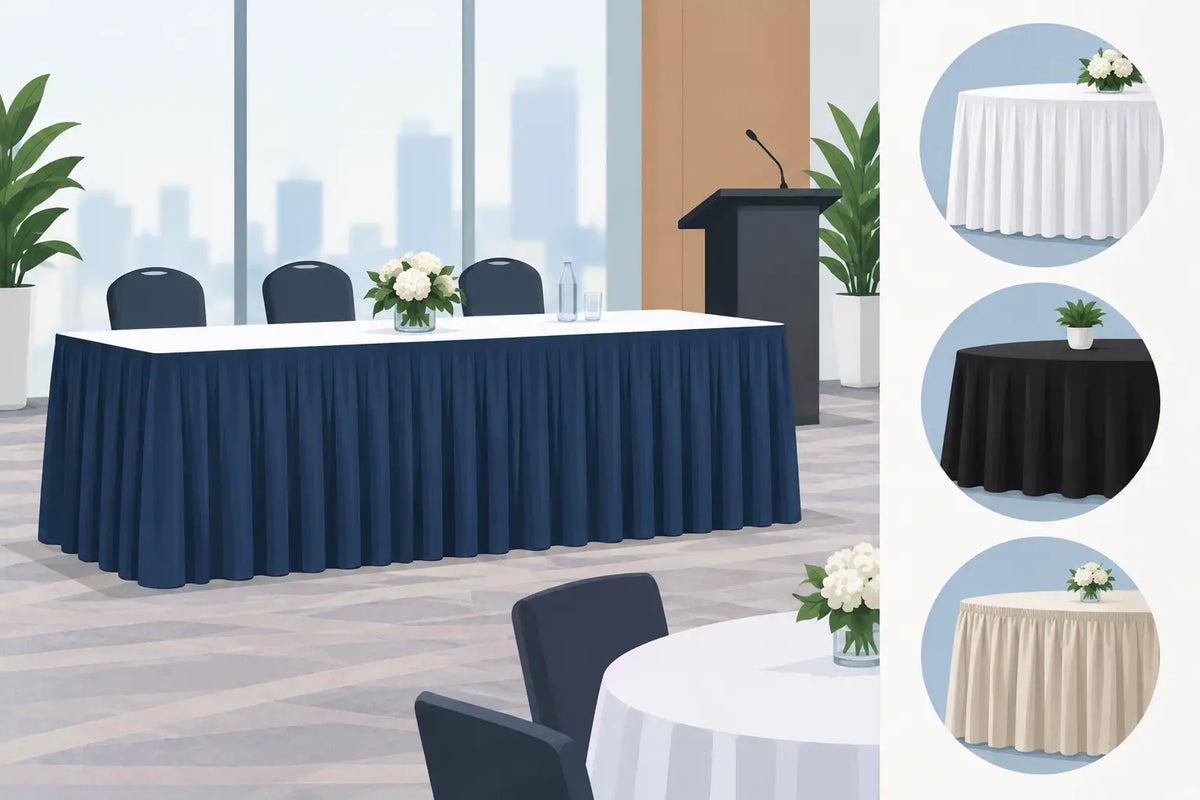
A bare banquet table can make a well-planned room look unfinished, especially when guests can see stored serviceware, catering supplies, or table legs underneath. Table skirts create a clean perimeter around buffet stations, registration desks, head tables, display tables, and back-of-house work surfaces. For rental operators, venues, caterers, and event teams, the right skirt also needs to install quickly, survive repeated laundering, and fit the tables already in inventory.
The purchasing decision is more involved than selecting a color. Table dimensions, drop length, attachment hardware, fabric weight, pleat style, and laundering requirements all affect whether a skirt performs well in the field. A product that looks appropriate for a one-time wedding may not be the best choice for a high-turn rental fleet.
Start With the Table and Required Drop
Measure the table before choosing a skirt. A skirt covers the exposed sides of a table, while a tablecloth typically covers the top and may hang over all edges. For buffet service, a skirt is usually paired with a topper or fitted cloth that covers the tabletop and conceals the attachment edge.
The key measurement is the linear footage around the sides that will be visible. A standard 6-foot rectangular banquet table dressed on three sides requires roughly 14 linear feet of skirting: 6 feet across the front plus 4 feet on each end. If all four sides are exposed, the requirement rises to approximately 20 feet. An 8-foot table needs about 16 linear feet on three sides or 24 feet around all four sides.
Round tables require a different calculation. Measure the circumference, or use the table diameter to determine it. A 60-inch round table has a circumference of about 15.7 feet, so a 17-foot skirt provides practical coverage. Allow a little extra length when a full, gathered presentation is required or when the table has legs, braces, or uneven surfaces that affect placement.
Drop length matters just as much. A 29-inch to 30-inch drop suits standard banquet tables, while taller cocktail, bar-height, or display tables need longer skirting. Skirts that stop noticeably above the floor can expose storage and look undersized. Skirts that pool on the floor become a trip hazard, collect dirt, and can catch on carts or guests' shoes. Measure from the attachment point to the finished floor, not from the top of a linen topper.
Plan for Open Sides and Service Access
Not every table should be skirted all the way around. Caterers often leave the back open for staff access to chafers, backup pans, and power connections. Registration teams may leave a side open for seated staff. A stage-front table may only need a clean front presentation.
Ordering or stocking standard lengths for common configurations reduces setup time. It also prevents crews from forcing an oversized skirt into an awkward corner or joining multiple short sections where one continuous panel would look better. For rental operations, keeping a clear reference chart for 4-foot, 6-foot, and 8-foot tables is a practical way to reduce loading and packing errors.
Table Skirts: Fabric and Pleat Choices
Polyester remains a common commercial choice because it offers dependable color retention, manageable wrinkle resistance, and repeat-use durability. It works well for banquet rooms, conferences, catered buffets, and rental inventories where linens are washed frequently. The trade-off is that lighter polyester can look less substantial under strong lighting or in premium hospitality settings.
Heavier fabrics and textured options can provide a more upscale finish, but they may require more careful handling, pressing, and storage. Satin-style fabrics create sheen for formal receptions and head tables, yet they show snags, water marks, and wrinkles more readily than matte commercial polyester. For high-volume service, an easy-care fabric often produces the better long-term return even if a specialty material has more visual impact.
Pleat style changes both the look and the amount of fabric needed. Box pleats provide a tailored, structured appearance that works well in corporate, venue, and food-service applications. Accordion or knife pleats create a consistent vertical pattern with a formal feel. Gathered skirting has more fullness and can suit weddings, head tables, and decorative displays, but it generally uses more material and may be less efficient to store.
Color selection should support the broader inventory plan. Black is a workhorse for catering, audiovisual tables, conferences, and bars because it conceals scuffs and blends into many room designs. White and ivory remain useful for weddings and formal dining, although they demand stricter stain control. Neutral shades can serve venues with established palettes. If branded or themed colors are needed, custom-order programs may be the right route, but confirm lead times before committing to an event date.
Choose an Attachment Method That Fits Your Fleet
Table skirting is only as reliable as its attachment system. Clips are a familiar option for standard banquet tables and allow crews to install skirts without altering the linen. The clip must match the table edge thickness and profile. A clip designed for a thin plywood banquet table may not hold securely on a thicker plastic folding table, molded edge, or specialty tabletop.
Hook-and-loop attachment offers speed and a clean upper edge when compatible strips are installed on the table. It can be effective for venues and permanent service stations where the same tables are used repeatedly. The limitation is compatibility: adhesive-backed components can fail if surfaces are dirty, textured, or exposed to heat and moisture, and tables need to be prepared consistently.
For rental fleets, standardizing attachment hardware is usually more valuable than chasing a single low unit price. Crews work faster when clips, tables, and skirts are designed to work together. Keep extra clips and replacement pieces available, especially for peak-season loading. A missing attachment component can turn a polished buffet setup into a last-minute workaround.
Test Before Buying at Scale
Before placing a large order, test one skirt and attachment set on each table style in your inventory. Check how the material hangs at corners, whether clips remain secure when the skirt is pulled lightly, and whether the finished edge stays level on uneven floors. Test the setup with a topper, chafers, cable runs, or other equipment that crews normally use.
This small step is particularly useful when adding resin folding tables, new banquet tables, or mobile bar systems. Compatibility problems are easier and less expensive to solve before dozens of units reach the warehouse.
Build a Skirting Inventory Around Real Jobs
A balanced inventory should reflect the events you serve most often, not every possible color or pleat pattern. A caterer running buffet lines may need a deep supply of black polyester skirts in standard 14-foot, 17-foot, and 21-foot lengths. A wedding venue may require more white or ivory options, plus specialty skirting for sweetheart tables and head tables. Municipal facilities and schools may prioritize neutral colors that work across meetings, banquets, fundraisers, and community events.
Consider how the products move through your operation. Skirts need labeled storage, clean folding procedures, and enough capacity to cover overlapping events while soiled linens are being processed. Commercial-grade linens earn their value through repeat turns, but only if staff can identify the correct size quickly and return pieces to inventory in usable condition.
For a growing operation, start with the sizes that cover your most common tables and expand from actual demand. A smaller, compatible inventory is easier to manage than a broad assortment with gaps in the lengths crews request every weekend. Special Event Sales can help buyers align skirting selections with commercial tables, linens, and related event equipment when building out a new fleet or refreshing existing stock.
Care Practices That Protect Appearance and Margin
Table skirts receive more abuse than many front-of-house linens. They are exposed to food service, beverages, rolling carts, outdoor dust, tape residue, and repeated handling at the attachment edge. Prompt stain treatment and consistent laundering procedures preserve color and reduce permanent spotting.
Avoid packing damp skirts or storing them in sealed bins after an event. Moisture can create odor, mildew, and staining that is difficult to remove. Fold clean skirts by length and label storage shelves by size, color, and pleat type. If crews routinely use the wrong section or combine mismatched panels, the issue is often an inventory organization problem rather than a staff-training problem.
Inspect attachment edges during every wash-and-return cycle. Loose stitching, damaged hook-and-loop material, and worn headers are cheaper to repair early than to replace after a failure at an event. Keep presentation standards clear: a skirt with visible stains, broken pleats, or frayed edges should not go out for a client-facing setup.
The best table skirting program is not necessarily the most decorative one. It is the one that matches your tables, installs predictably, launders efficiently, and gives every service area a finished appearance when the room needs to be ready on schedule.