
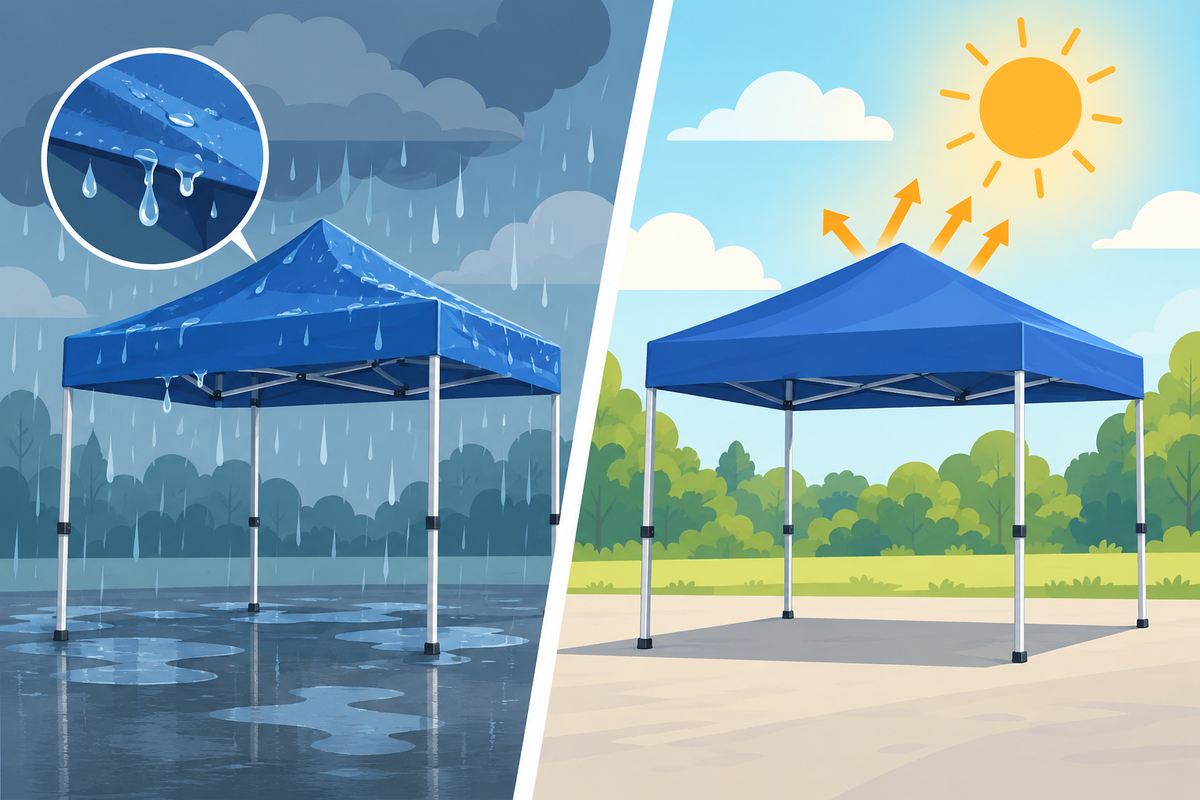
A tent can look properly installed at noon and hold hundreds of pounds of water by the end of an afternoon storm. Understanding why tents pool is not just a housekeeping issue for rental operators and venues. Ponding water can stretch fabric, stress frames, create unsafe work conditions, interrupt an event, and shorten the service life of high-value inventory.
For commercial tent operators, the answer is rarely one isolated mistake. Water pooling usually comes from a combination of site conditions, tent selection, installation tension, and weather load. The right response starts before the first stake is driven.
Why Tents Pool Water on Otherwise Good Installations
Tent tops are designed to shed water, not store it. Their ability to do that depends on a continuous slope from the peak or eave to the edge of the structure. When any area loses that slope, water finds the low point. As rain collects, the added weight pulls the fabric down farther, making the low point deeper and allowing even more water to accumulate.
This cycle can develop quickly. Water weighs about 8.3 pounds per gallon, so even a shallow-looking pocket can become a significant load. A 10-by-10-foot area holding only one inch of water contains more than 60 gallons. That is roughly 500 pounds concentrated where the top, frame, and connections may not be intended to carry it.
High-peak frame tents, pole tents, clearspan structures, and engineered tension tents shed water differently, but none are immune to pooling when installed outside their intended setup requirements. The tent style must match the site, forecast, span, sidewall plan, and expected duration of use.
Insufficient Top Tension
Loose fabric is one of the most common causes of tent ponding. On a frame tent, the top may not be fully tensioned at the ratchets or webbing straps. On a pole tent, side ropes may be under-tensioned, center poles may not be seated correctly, or the perimeter stake pattern may be uneven. With clearspan tents, improper keder insertion, incomplete frame assembly, or missed tensioning procedures can leave panels without a clean water-shedding profile.
Fabric also changes under load and temperature. A top installed tight in warm afternoon conditions may relax overnight. Rechecking tension after installation and before severe weather is a practical operating habit, particularly on larger structures and multi-day jobs.
Uneven Ground and Poor Site Preparation
A level-looking site is not always level enough for a tent installation. Soft soil, buried utility trenches, recently filled ground, asphalt transitions, and sloped parking areas can all affect leg height, stake holding, and frame alignment. If one section settles after setup, the roof line can lose its intended pitch.
Ground conditions also influence drainage around the tent. Water flowing toward the structure can saturate soil, weaken stake retention, and create standing water at entrances. The top may shed rain correctly while the event area still becomes unusable because site drainage was not addressed.
A pre-install walk-through should identify low areas, runoff paths, curbs, irrigation zones, roof downspouts, and changes in surface material. For long-term or high-traffic installations, tent flooring or ground-protection systems can help create a more stable, usable event surface. They do not replace drainage planning, but they can reduce the impact of wet ground on guest circulation and equipment placement.
Wrong Tent Size or Layout for the Weather
A tent footprint selected only for guest count may leave too little protected space for rain management. Water tends to drip from eaves, collect near sidewalls, and enter through open ends during wind-driven rain. A tight layout with no overhang, no gutters, and no runoff plan can make a technically sound tent feel like it is failing.
Large connected tent installations require additional attention. Gutters between tent bays must be compatible, installed correctly, and maintained throughout the event. If a gutter sags or becomes obstructed, it can collect water and transfer load to adjoining tops. Likewise, sidewalls can direct runoff to a concentrated area along the perimeter, especially when the grade slopes inward.
When rain is likely, consider whether the operation needs a larger canopy, additional covered walkways, rain gutters, sidewalls, or a different orientation. The right configuration is often less expensive than managing an emergency during guest arrival.
Damaged, Stretched, or Contaminated Fabric
Tent tops have a service life. Repeated installation, transport abrasion, ultraviolet exposure, improper storage, and past water loads can stretch fabric or damage seams. A top that once fit tightly may develop a recurring low spot even when the frame is square and the straps are properly tensioned.
Dirt, leaves, tape residue, and debris can also interfere with water flow. On connected structures, debris may collect at valleys, gutters, or keder channels. Regular cleaning and inspection make it easier to spot early signs of wear, including weakened webbing, seam separation, pinholes, or distorted panels.
A commercial fleet should treat tops as inspectable assets, not interchangeable covers. Marking equipment by size and condition, recording repairs, and removing compromised tops from service protects both crew efficiency and event reliability.
Prevent Tent Water Pooling Before Setup Day
The strongest prevention measure is matching the tent system to the application. A backyard-style canopy is not a substitute for a commercial tent when the job involves extended use, sidewalls, public occupancy, weather exposure, or repeated rental cycles. Commercial-grade frames, fittings, tops, anchoring options, and replacement components are built around more demanding operating conditions.
Before dispatch, confirm the exact tent model, width, length, top type, sidewall configuration, and anchoring method. Crews should have the manufacturer’s setup instructions for that specific system, not a general procedure from a similar tent. Small differences in frame geometry, ratchet placement, or cable routing can affect roof tension.
At the site, square the layout before raising the top. Measure diagonals on frame systems and verify that legs are set to consistent heights unless the manufacturer specifically permits a graded configuration. Do not compensate for an uneven site by forcing a frame out of square. That can create tension problems and put unnecessary stress on fittings.
Use the approved anchoring method for the ground condition and local requirements. Stakes, ballasting, and engineered anchoring systems each have limits. An anchor that appears secure in dry ground may perform differently after prolonged rain saturates the soil. If site conditions or the forecast exceed the tent’s operating limitations, the correct decision may be to delay installation, change the configuration, add appropriate engineered measures, or remove the tent from service.
A Practical Inspection Routine for Rain Events
A short inspection routine gives crews a chance to correct small issues before they become costly. Before opening the event area, inspect the roof line from multiple angles, confirm that straps and ratchets are secure, check for sagging gutters, and walk the perimeter to see where runoff is moving.
During rain, assign a trained team member to monitor the structure. Watch valleys, roof panels near frame joints, connected-tent gutters, and any area that has pooled on prior jobs. Check sidewalls and exits as well. Water at a doorway, electrical distribution point, catering station, or flooring transition can create operational problems even without a roof pocket.
After the storm, inspect again. Water load can loosen tension, shift ballast, soften soil, and reveal a top that needs repair. Drying and cleaning equipment before packing is equally important. Folding wet vinyl into storage invites mildew, staining, odor, and premature material deterioration.
What to Do When Water Is Already Pooling
A visible water pocket requires immediate judgment, not improvised heroics. Keep guests and untrained staff away from the affected area, assess the amount of water and the stability of the tent, and follow the manufacturer’s emergency guidance. Do not climb on the tent, stand beneath a loaded pocket, cut the top, or strike structural components while water is suspended overhead.
For a small, early-stage pocket on a stable structure, trained personnel may be able to restore proper tension using the tent system’s intended adjustment points. That work should be done carefully and only when it can be completed without placing anyone in the path of released water or destabilizing the structure. A large accumulation, high winds, lightning, compromised anchoring, or visible fabric damage changes the situation. Evacuate the area and follow the event’s weather and emergency plan.
The incident should also trigger a post-event review. Was the site sloped incorrectly? Was the frame out of square? Did the top have prior stretch? Was a gutter undersized for the connected layout? Recurring ponding is a signal that the installation method, equipment condition, or tent selection needs correction.
Build Rain Readiness Into Your Tent Inventory
Reliable rain performance is built into purchasing decisions. A fleet needs tent systems with properly matched tops, frames, ratchets, sidewalls, gutters, anchors, and replacement parts available when maintenance is required. It also needs enough inventory flexibility to select the correct footprint instead of forcing every job into the same configuration.
Special Event Sales supports professional buyers with commercial tent options, tent flooring, ground-protection products, and the event infrastructure needed to build more dependable outdoor environments. For operators managing seasonal demand, standardizing compatible systems can simplify crew training, replacement-part purchasing, and setup inspections.
Rain is part of the job, but ponding water does not have to be. A square installation, tight top, sound drainage plan, and disciplined inspection process give your crew a better chance of keeping the structure working as intended when the forecast changes.