
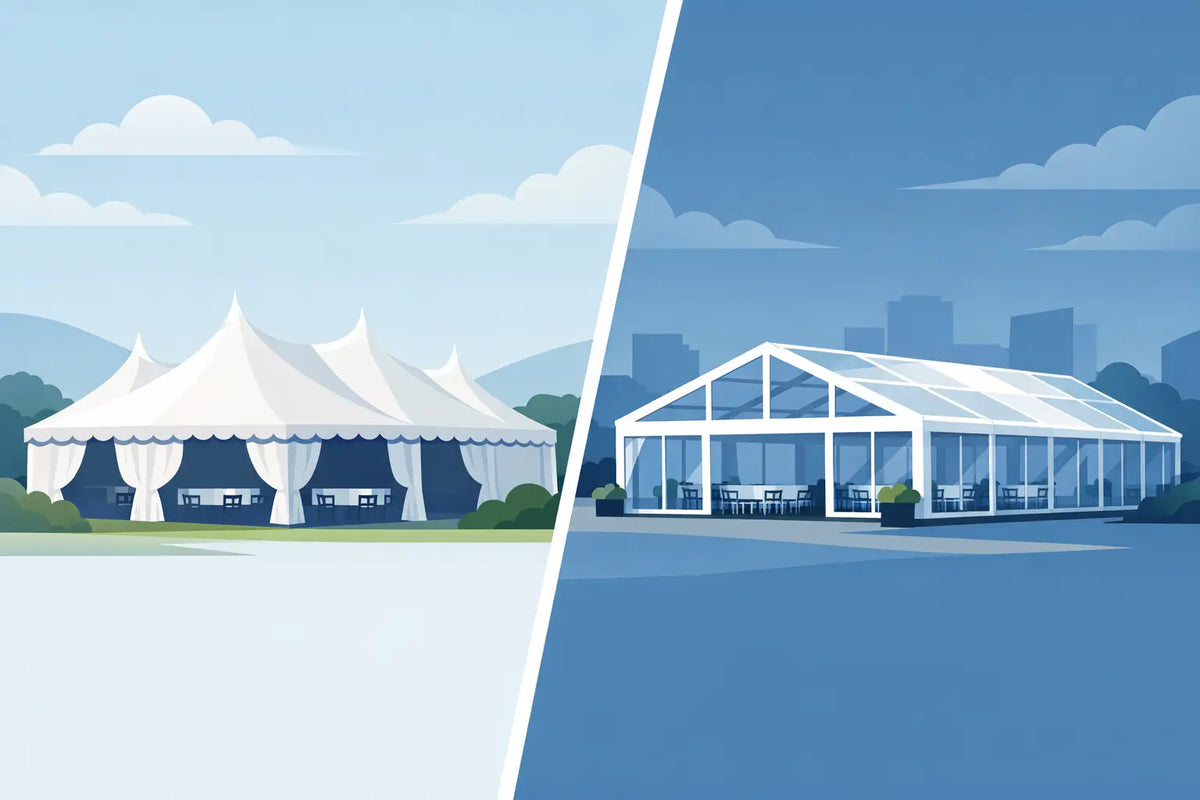
A 40-foot tent with center poles may be a practical answer for a weekend wedding. That same footprint can become a poor fit when a client needs an unobstructed vehicle display, a municipal dining hall, or a production floor with staging and catering access. The marquee tents versus clearspan tents decision is not simply about appearance. It affects usable square footage, labor planning, permitting, transport, accessory compatibility, and the type of work your operation can confidently take on.
For rental companies, venues, and event producers, the right choice starts with the event load and site conditions, then moves to the ownership model. A lower acquisition price can make sense for frequent standard-size installations. A higher-capacity structure may justify its cost when it opens the door to longer-term, larger, or more technical installations.
Marquee Tents Versus Clearspan Tents: The Core Difference
The term marquee tent is used differently across the event industry. In many cases, it refers broadly to a traditional party tent or a frame-style tent used for weddings, hospitality, and temporary gatherings. These tents may use perimeter legs and, depending on the style and width, interior support poles. They are commonly available in modular sizes and can be configured with sidewalls, liners, lighting, flooring, and anchoring systems.
A clearspan tent is a commercial-grade, engineered structure built around an aluminum frame. Its defining feature is the absence of interior support poles across the tent floor. The frame transfers loads to the perimeter, leaving a clear interior that is more adaptable for seating, exhibits, equipment, and vehicle access.
That difference in structure creates the practical divide. A marquee tent often provides a cost-effective, flexible solution for conventional events. A clearspan tent is designed for projects where open space, scalable width, and engineered performance matter more than the lowest initial purchase price.
When a Marquee Tent Is the Better Purchase
Marquee tents remain a core fleet product for good reason. They are well suited to wedding receptions, backyard-scale hospitality, school functions, community events, and rental packages where speed, familiar configurations, and budget control are priorities. Their modular nature allows operators to stock popular widths and lengths, then add bays as bookings require.
For a rental company building inventory, marquee tents can create a strong entry point into tented events. They pair naturally with folding chairs, banquet tables, linens, lighting, sidewalls, and basic flooring. A standardized package is easier to quote, load, install, and turn around during peak season.
They can also be the more sensible option where the tent will be used for short-duration events and the client does not need a fully open floor. Center poles are rarely a problem for a standard dining layout if tables can be planned around them. In fact, placing poles within a layout can be preferable to paying for more structural capacity than the job requires.
The trade-off is that interior supports limit layout freedom. They can interrupt dance floors, buffet lines, trade-show aisles, and sightlines. They also require more planning when the tent must cover fixed features such as doors, equipment, or service counters.
Where Clearspan Tents Earn Their Higher Cost
Clearspan tents are built for jobs that demand a clean, uninterrupted interior. Think corporate product launches, large weddings, festivals, temporary warehouses, sports facilities, emergency response operations, construction shelters, and multi-week hospitality structures. The lack of center poles gives planners far more freedom to organize tables, stages, bars, vehicles, partitions, and service areas.
This matters most when every square foot has a purpose. A clearspan structure can support wide banquet seating, theater layouts, exhibit booths, or industrial storage without designing around interior obstructions. It also simplifies the installation of tent flooring, staging, pipe and drape, lighting grids, and other infrastructure that needs predictable open space.
Clearspan tents are generally available in larger widths than standard marquee configurations and can extend in length through additional bays. That scalability is valuable for operators pursuing larger contracts or recurring installations. A tent can grow with the scope of an event while maintaining the same open-floor advantage.
The frame system is also a stronger fit for projects requiring engineered documentation, specified wind or snow ratings, and formal permitting review. Requirements vary by jurisdiction, site, season, anchoring method, and tent configuration. Buyers should verify the applicable engineering, fire certification, installation instructions, and local code requirements for each project rather than assuming one tent specification applies everywhere.
Compare the Operational Requirements Before You Buy
A clearspan tent is not automatically the better business decision. It requires a more considered operating plan. Aluminum frame components, roof covers, legs, connectors, ratchets, and accessories need organized storage, accurate picking, trained crews, and consistent inspection. Larger units may require equipment for handling and lifting, particularly when installing higher eaves or longer roof sections.
Marquee tents also require proper training and disciplined installation, but their familiar configurations can make them easier to deploy for routine jobs. If your crews regularly install 20-foot or 30-foot event tents, expanding within that system may be more efficient than adding a new structural platform immediately.
Transportation is another meaningful factor. Both tent types break down for delivery, yet clearspan systems typically involve more substantial frame components and a wider range of parts. Consider trailer space, storage rack capacity, component labeling, replacement-part availability, and the time required to inspect equipment after each return. A tent system only produces revenue when it can be turned quickly and sent out complete.
Anchoring deserves the same attention. Stakes may be appropriate on suitable turf or soil, while concrete, asphalt, rooftop, and protected surfaces often require engineered ballast plans. Clearspan installations can involve significant loading requirements, especially for larger widths or challenging weather conditions. Do not treat ballast as an add-on decided after delivery. Confirm the site, surface, underground utility restrictions, access routes, and required anchoring method during quoting.
Layout, Flooring, and Guest Experience
The tent itself is only part of the customer’s usable environment. A marquee tent may be enough for a casual reception on level grass, but an upscale wedding, corporate dinner, or public-facing event often needs flooring, sidewalls, lighting, climate control, and a finished entrance to feel complete.
Clearspan tents make these upgrades easier to plan because the floor is uninterrupted. Full flooring systems can run wall to wall without working around center poles. Large dance floors and stages can sit where the event design needs them. Sidewalls can create weather protection and help manage sightlines, while clear roof or window wall options can change the feel of a daytime or evening installation.
Still, clearspan capacity does not eliminate site limitations. Uneven ground, drainage issues, restricted truck access, overhead utilities, trees, and tight urban loading zones can complicate any tent project. A smaller marquee tent that fits the site cleanly can be the more dependable solution than a larger structure that creates installation risk.
Make the Decision Based on Revenue, Not Just Tent Price
The most useful purchasing question is not, “Which tent costs less?” It is, “Which tent will produce the right jobs with the fewest operational surprises?” Marquee tents can provide fast payback through repeatable social-event rentals and standard package sales. Clearspan tents can support higher-value work, longer rentals, and larger clients, but only if your sales pipeline, crew capacity, storage, transport, and technical processes are ready.
For growing operators, a mixed fleet is often the practical answer. Keep marquee tents available for fast-turn, price-sensitive events, then add clearspan capability for projects where open interiors and engineered scale create a real selling advantage. Standardizing accessories such as sidewalls, flooring connections, doors, lighting mounts, and replacement hardware can also reduce complexity across the fleet.
Before placing an order, document the widths and lengths you rent most often, the largest jobs you have declined, common site surfaces, seasonal weather exposure, and the accessories clients request repeatedly. Special Event Sales can help professional buyers evaluate commercial tent options alongside flooring, seating, staging, and the supporting equipment required to deliver a complete installation.
The right tent is the one your crew can install correctly, your inventory team can maintain confidently, and your sales team can quote without overpromising. Choose the structure that fits the work you have now, while giving your operation a clear path toward the work you want next.