
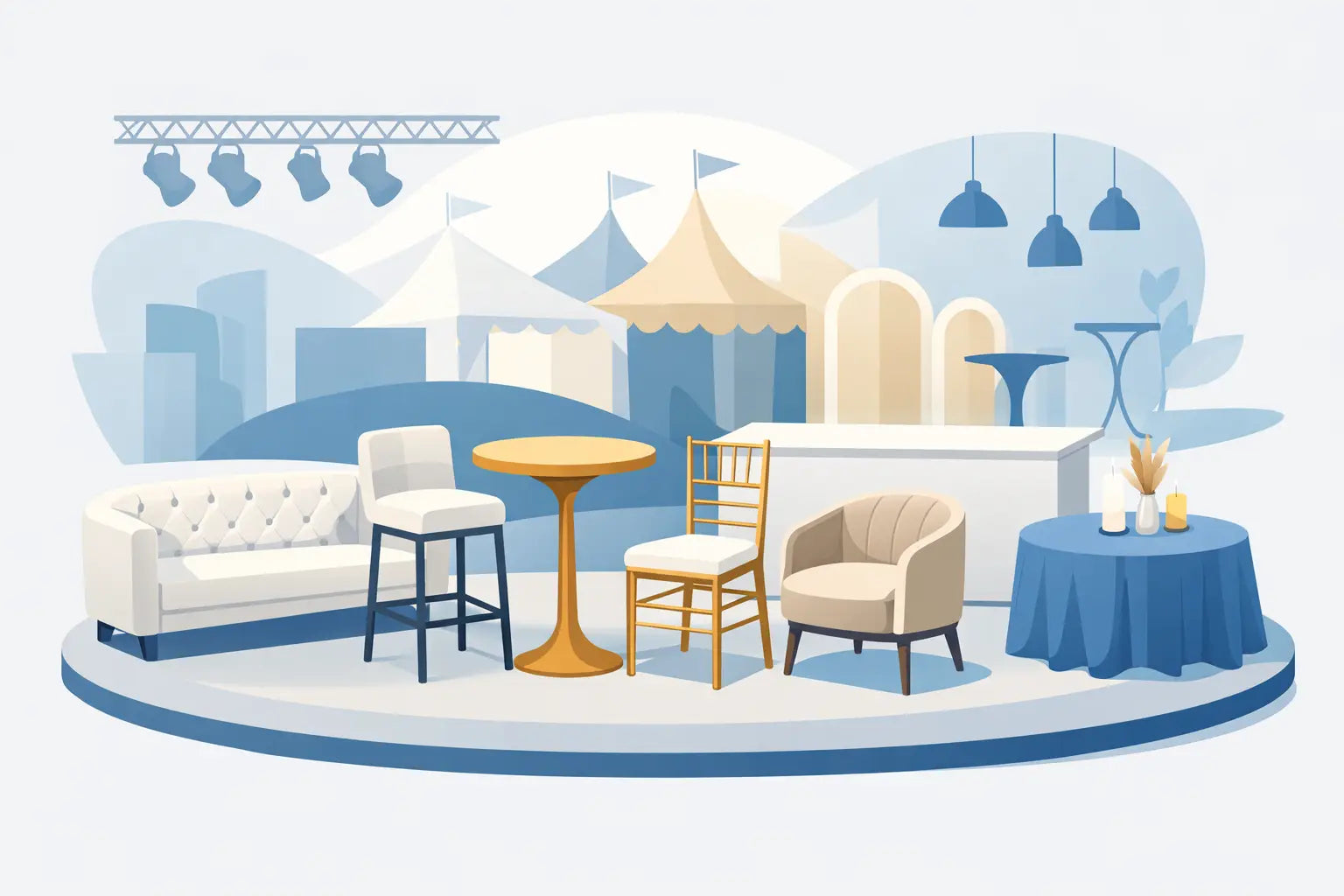
A chair that photographs well but takes too long to stack is not a premium purchase. A lounge set that looks impressive but will not fit through a standard service door can turn a quick room reset into a labor problem. Professional event furniture has to do more than fill a floor plan. It must support repeated transport, fast setup, guest comfort, cleaning, storage, and the visual standard your clients expect.
For rental operators, venues, caterers, and event production teams, the right furniture is a revenue-producing asset. The wrong mix creates damaged inventory, awkward layouts, excess labor, and missed opportunities when a client asks for a look you cannot supply. Purchasing decisions should start with how equipment will perform in the field, not only how it appears in a catalog image.
Start With the Event Environments You Serve
Before selecting styles or finishes, identify the environments where your inventory will work hardest. A hotel ballroom, tented wedding, conference center, municipal event, and outdoor hospitality patio place very different demands on furniture. Equipment that works well for one may be inefficient or unsuitable for another.
Banquet chairs and folding tables remain the core of many commercial fleets because they solve the highest-volume needs. They can be deployed across weddings, fundraisers, meetings, catered dinners, and community events. For buyers building a new inventory, these dependable categories usually deserve priority over specialized pieces that book less often.
Once core seating and tables are covered, look at the gaps in your market. A venue may need upholstered lounge furniture to sell upgraded reception packages. A tent company may benefit from farmhouse tables, bar-height tables, and ceremony seating that help clients source more of their event package from one provider. Corporate teams may need modular soft seating and presentation tables that can be reconfigured for meetings, product launches, and hospitality areas.
The goal is not to carry every style. It is to carry a deliberate range that covers frequent demand while giving clients a reason to choose your inventory over a basic commodity offering.
What Commercial Event Furniture Must Handle
Residential furniture is designed to stay in one room. Commercial event furniture is designed to be moved, loaded, stacked, cleaned, rented again, and still present well after hundreds of uses. That difference should drive every specification review.
Weight, strength, and crew efficiency
Weight is a trade-off, not a simple quality marker. Heavier furniture can feel substantial and may offer excellent stability, but it adds labor during loading and setup. Lighter products reduce handling strain and truck weight, but frames, joints, and hardware must still be built for commercial use.
Review how each item will be carried. Can one person safely move it? Does it stack securely? Is there a compatible cart? Can crews load it without damaging adjacent pieces? A well-designed chair cart or table dolly often protects the original furniture investment by reducing drops, scrapes, and rushed handling.
For tables, verify the frame construction, leg-locking system, edge treatment, and folded profile. A table that nests tightly can make a meaningful difference in warehouse space and truck capacity. For chairs, inspect reinforcement points, weld quality, glides, and stacking capability. These are small details until a busy Saturday turnover exposes every weak point.
Finish and cleanability
Event equipment encounters food service, drinks, outdoor dust, adhesive residue, floral water, and frequent sanitizing. Choose finishes that can be cleaned quickly without showing every mark. Commercial vinyl, powder-coated metal, durable resin, and properly protected wood each have a place, depending on the intended application.
White resin chairs remain popular for ceremonies because they create a clean, formal look and work across many wedding themes. They also need reliable storage and transport practices to prevent scuffing. Metal banquet chairs offer a familiar venue solution, especially when paired with replaceable seat pads. Wood chairs and farm tables can command stronger rental rates, but they require more careful handling and finish maintenance.
Consider replacement parts before placing a large order. Replaceable glides, cushions, hardware, and components can keep a fleet in service longer than products that must be discarded after minor damage. For high-turn equipment, serviceability is part of the purchase price.
Build Event Furniture Packages, Not Isolated Pieces
Clients rarely rent or purchase one item at a time. They need a complete guest environment: seating, dining tables, cocktail tables, bars, lounge groupings, staging, and sometimes tent flooring or pipe and drape. Furniture choices should coordinate with those surrounding categories.
A black folding chair may be a practical choice for ceremonies, meetings, and schools, while black bar stools and black cocktail tables extend that same visual language into receptions. Natural wood farm tables can pair with cross-back chairs, upholstered seating, and a wood-front bar. A modern white lounge collection can support corporate activations when matched with modular counters, stanchions, and clean flooring.
This does not mean every product needs an exact matching finish. It means the collection should create usable packages. When buyers can select coordinated pieces quickly, sales teams and rental staff spend less time solving preventable design conflicts.
Standardizing around a few core finishes also simplifies maintenance. Keeping consistent black, white, silver, natural wood, or clear-acrylic options can reduce the number of odd pieces that sit in storage because they do not work with anything else.
Match Inventory Depth to Demand, Not Optimism
A frequent purchasing mistake is buying too many styles in shallow quantities. Ten different chair designs may look impressive on a product list, but a rental operator cannot serve a 250-guest wedding if each design is available in quantities of 30 or 40.
Build depth in the items that book repeatedly. That may include folding chairs, banquet chairs, round tables, rectangular banquet tables, cocktail tables, and portable bars. Then use specialty inventory to create upgrades and differentiate your offering. The right balance depends on local demand, storage capacity, client profile, and how often you can turn equipment between events.
For a venue, depth often means enough matching seating and tables to serve its largest practical room configuration. For a rental company, it means enough core inventory to fulfill simultaneous weekend orders without stripping the warehouse bare. For a caterer or hospitality operator, it may mean flexible pieces that can be used across several properties or service formats.
Use recent order history and confirmed bookings to guide quantities. If a product has strong demand only during one seasonal period, consider whether it earns dedicated storage space year-round. If a product is used every week but frequently goes out with visible wear, increasing quantity may be more profitable than continually rushing repairs.
Plan for Storage, Transport, and Site Conditions
Furniture that performs well at the event can still create losses behind the scenes. Measure warehouse aisles, shelving, door openings, delivery vehicles, elevators, and loading areas before committing to large pieces. Oversized lounge components, bar units, and specialty tables may require more handling space than expected.
Protective covers, stacking carts, dollies, and storage racks are not optional accessories for a commercial fleet. They help crews move faster, reduce finish damage, and make count verification easier. A cart system also creates cleaner warehouse organization, especially when multiple crews are loading at once.
Outdoor use requires another level of planning. Furniture placed under a tent is not automatically protected from wind, moisture, uneven ground, or temperature changes. Choose stable bases for cocktail tables, use appropriate flooring where needed, and confirm that materials are suitable for the conditions. For long outdoor events, guest comfort can depend on details such as chair stability, shade, spacing, and accessible circulation paths.
Buy for Appearance, but Measure Value by Turns
Premium-looking furniture can help win higher-value work, but appearance alone does not determine return on investment. A product earns its place when it rents or performs frequently, stays presentable, and does not consume disproportionate labor or repair cost.
When comparing options, look beyond unit price. Consider usable life, replacement-part availability, storage density, freight impact, compatible carts, cleaning time, and likely rental rate. A lower-cost item that needs frequent replacement may cost more over several seasons than a stronger commercial-grade alternative. At the same time, the most expensive option is not automatically the best fit if it does not match your customers or booking volume.
Special Event Sales helps professional buyers source event furniture alongside the tables, seating, bars, flooring, staging, and operational equipment needed to put it to work. That category depth matters when you are building a coordinated inventory instead of purchasing isolated pieces from multiple suppliers.
The best furniture purchase makes the next event easier to load, faster to set, better to photograph, and more profitable to repeat. Start with the jobs your team performs every week, then add the pieces that help you sell the next level of service with confidence.