
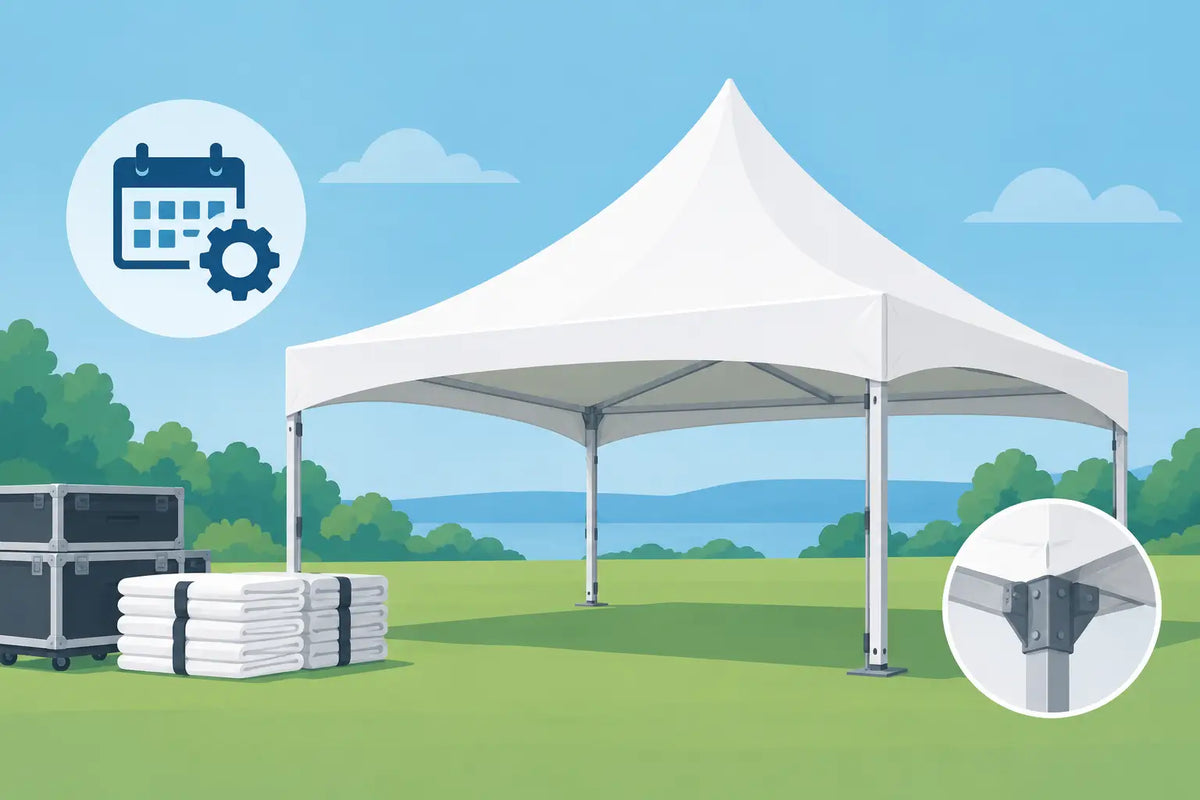
A tent system can look efficient on a product page and still create costly friction in the field. For rental operators, the real test is whether crews can load it, build it, secure it, strike it, and return it to inventory without losing time or parts. This Turbotrack tent review focuses on those operating realities rather than treating a commercial tent as a one-time purchase.
Where a Turbotrack Tent Fits
Turbotrack-style tent systems are most relevant to operators that need repeatable setups and a clean, professional finished look across a varied event calendar. That can include wedding rentals, corporate functions, municipal events, hospitality overflow, seasonal patios, and production environments where timelines are tight and crew labor is expensive.
The appeal is not simply the canopy. A commercial tent is a system made up of frame members, roof and side fabric, connectors, stakes or ballasting, anchors, transport packaging, and replacement parts. A good system reduces uncertainty at every one of those touchpoints. It should be clear which component belongs where, easy to inspect between rentals, and practical to expand when a customer needs a larger footprint or additional sidewalls.
For a growing rental company, the best use case is usually a standardized fleet. Keeping compatible tent widths, sidewalls, accessories, and anchoring equipment helps crews work faster and allows dispatch teams to build accurate orders. A tent that is excellent in isolation but introduces a new hardware format can be less valuable than one that fits the equipment already on the shelf.
Turbotrack Tent Review: What to Evaluate First
The right purchase decision depends on how the tent will earn revenue. Before comparing price, evaluate the following operational points against the events you serve most often.
Frame design and daily handling
Start with the frame. Commercial buyers should look at the material, tube profile, connector design, finish, and the way components lock together. The frame must tolerate repeated loading, unloading, handling, and exposure to weather without turning routine setup into a repair project.
Ask whether the parts are intuitive for a trained crew to identify under pressure. Consistent labeling, manageable section lengths, and connectors that do not require excessive force all affect setup speed. A tent that saves only 20 minutes on installation can create meaningful labor savings across a busy season.
Weight is a trade-off. Lighter components can reduce crew strain and speed transport, but they should not come at the expense of the engineering needed for the intended installation conditions. Heavier-duty systems may require more labor and transport capacity, yet be the better investment for operators serving wind-exposed sites, longer installations, or demanding commercial customers.
Installation speed is more than assembly time
Quick assembly matters, but installation speed also includes staging parts, laying out the footprint, anchoring, hanging sidewalls, inspecting the structure, and packing the system afterward. Review the complete workflow rather than timing only the moment the frame goes up.
A practical field test uses a normal crew, a realistic site, and the equipment your company already owns. Time the process from trailer door to ready-for-inspection tent. Then repeat the exercise during teardown and count the number of loose components that must be sorted and accounted for.
This test often reveals the hidden cost of a tent system. If hardware is easy to misplace, fabric panels are difficult to distinguish, or frame pieces need constant correction during assembly, labor expenses can outweigh an attractive upfront price. Storage carts, labeled bags, and dedicated racks can improve performance, but they should be included in the total equipment plan.
Fabric, sidewalls, and guest presentation
Clients see the top and sidewalls before they notice the frame. Fabric condition directly affects perceived value, especially for weddings, venue installations, and corporate events. Inspect the material weight, reinforcement at stress points, seam quality, grommets or attachment methods, and how the top fits after repeated use.
A tight, orderly roofline and properly fitted sidewalls create a more polished event environment. Loose fabric, difficult-to-align panels, and inconsistent wall heights create avoidable callbacks from planners and venue managers. If sidewalls are part of your regular offering, confirm that solid, windowed, and entrance options are available in the sizes your customers request.
White tops are the standard for many event fleets, but cleaning and maintenance must be part of the decision. Determine how easily fabric can be removed, dried, folded, and inspected before it goes back into storage. A system that keeps components organized and protected will preserve its rental appearance longer.
Anchoring, weather planning, and compliance
No tent review is complete without addressing site conditions. The tent itself is only one part of a safe installation. Ground conditions, anchoring method, ballasting, local permits, wind plans, occupancy layout, and fire requirements must be evaluated for every job.
Do not assume that a tent’s advertised strength or general product description replaces engineering documentation or local authority requirements. Request the relevant fire certification and technical information for the exact fabric and configuration being considered. For installations on asphalt, concrete, rooftops, manicured grounds, or other no-stake sites, plan the appropriate ballast method before accepting the event.
This is an area where the lowest-cost package can become expensive. A system that lacks the required documentation, compatible anchoring solutions, or replacement hardware may delay a permit review or force an operator to substitute equipment at the last minute. Professional buyers need a tent package that supports safe, repeatable procedures, not just a frame and top.
Compatibility Determines Long-Term Value
A Turbotrack tent can be a strong addition when its components support the way your fleet operates. The most valuable questions are not only about the initial configuration. They are about what happens when the first busy season produces lost fittings, damaged sidewalls, last-minute size changes, and customer requests for flooring, lighting, drape, or climate control.
Confirm whether replacement parts can be identified and ordered individually. Check the availability of additional bays, sidewalls, doors, gutters, and compatible accessories. If you operate multiple tent brands, verify whether the system can share any common accessories, while avoiding unsafe assumptions about interchanging structural parts.
Flooring deserves early consideration as well. A tented event feels more complete when the surface is level, clean, and appropriate for the guest experience. Rental companies that regularly provide tent flooring, dance floors, staging, furniture, or catering equipment should evaluate the entire installed environment. The tent needs enough usable interior clearance and a layout that accommodates entrances, service lanes, bars, tables, and emergency access.
Costs Beyond the Purchase Price
The equipment quote is the beginning of the cost calculation. Freight, storage, transport, labor, anchors or ballast, cleaning, repair inventory, and downtime all affect the return on investment. A tent with a lower purchase price may be the right fit for occasional use, but frequent-rental fleets should prioritize serviceability and predictable labor.
Consider how many rentals are required to recover the investment at your normal pricing. Use conservative utilization assumptions, especially if the equipment will be concentrated in a short wedding or festival season. Also account for peak-date demand. A tent system that covers a common size requirement can generate more dependable revenue than a specialized size that is booked only a few times each year.
Financing can help preserve working capital when building a new inventory category, but it does not solve a poor product fit. Purchase the configuration that your sales history supports first, then add extensions and accessories as demand becomes proven.
Who Should Buy a Turbotrack Tent?
This type of tent is most compelling for rental and event professionals who value organized, repeatable installations and intend to use the equipment often enough to benefit from a standardized system. It may also fit venues and hospitality operators that need dependable temporary coverage for scheduled functions, provided their staff can manage installation requirements or work with qualified tent professionals.
It may be less suitable for buyers seeking an occasional consumer-grade backyard canopy, or for companies that cannot support the storage, transport, anchoring, and inspection practices commercial tent equipment requires. Bigger is not automatically better. The best first purchase is usually the size and accessory package that solves the most frequent customer request with the fewest exceptions.
Before placing an order, document your typical site types, expected crew size, transport capacity, anchoring needs, and target event layouts. A knowledgeable supplier such as Special Event Sales can help match commercial tent equipment and related infrastructure to that operating plan. The practical next step is to select a system your crew can build confidently, your warehouse can manage efficiently, and your customers will be willing to rent again.