
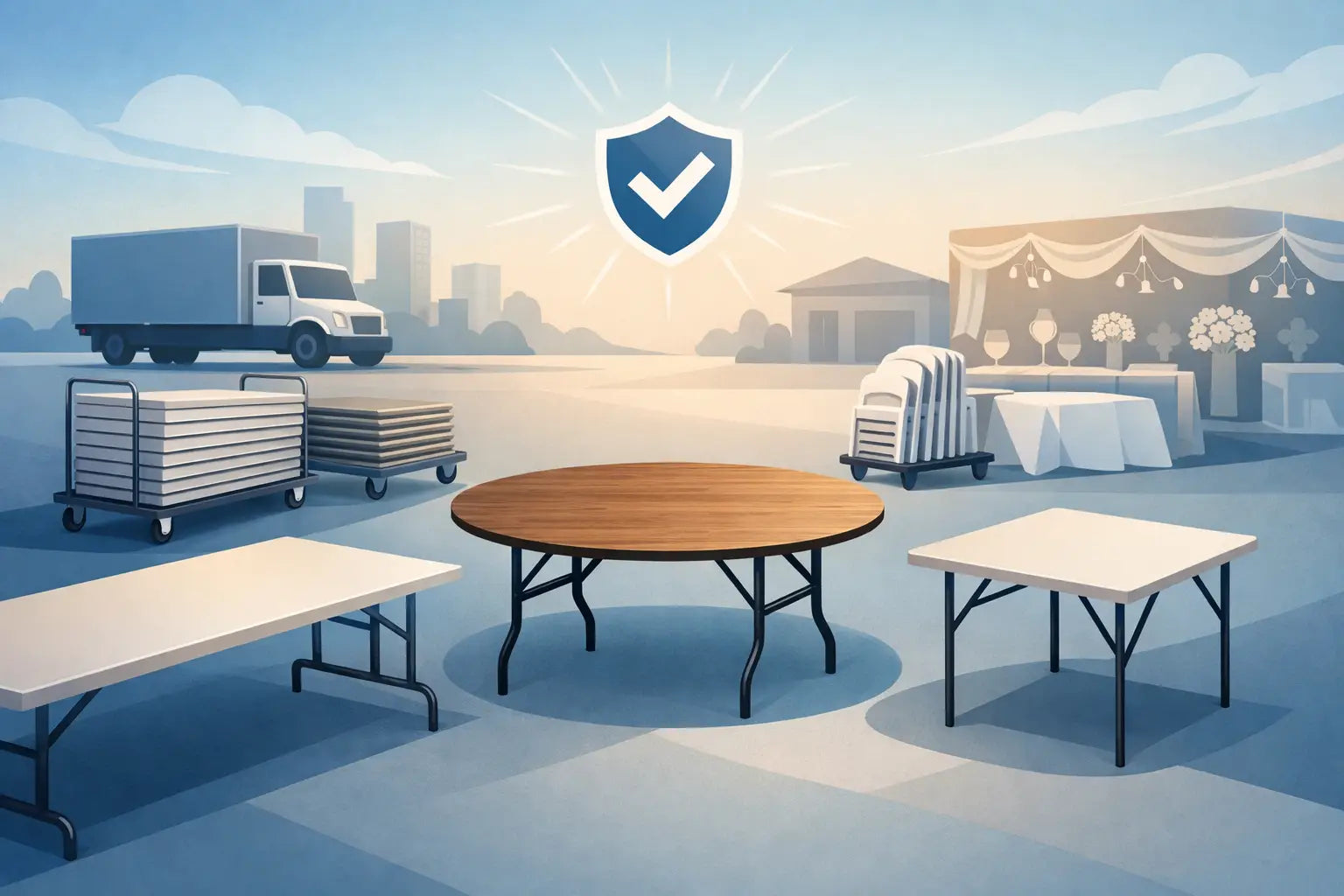
A banquet table can look fine on a showroom floor and still become an expensive problem after a season of loading docks, gravel tent sites, wet grass, and tight turnaround crews. For banquet tables for rental companies, the buying decision is not about filling a room once. It is about how many profitable turns each table can deliver before repairs, replacement, or customer complaints start cutting into the fleet.
The right table program helps crews load faster, customers plan confidently, and operations maintain a consistent presentation across weddings, corporate functions, catered events, and tented installations. The wrong mix creates awkward linen sizing, unstable setups, damaged tabletops, and storage areas that consume more space than they should.
Start With the Events You Actually Serve
Before comparing materials or prices, review the jobs that drive your revenue. A wedding-focused rental company may need a broad inventory of round tables in popular guest counts. A caterer or hospitality operator may rely more heavily on rectangular tables for buffet lines, head tables, prep areas, and conference layouts. Tent rental operators often need both, plus narrow utility tables that support registration, bars, service stations, and back-of-house work.
A practical starter fleet usually centers on the sizes customers request repeatedly. Round tables are commonly selected for guest seating and create an efficient social layout, while rectangular banquet tables give planners flexibility for dining rows, classroom seating, buffet service, and family-style arrangements. Square tables can be useful for smaller dining layouts or lounge environments, but they should be added when local demand supports the extra SKU.
Capacity claims deserve a realistic review. A 60-inch round may be marketed for eight to 10 guests, but the correct count depends on chair width, charger plates, centerpieces, and the level of comfort the client expects. Rental companies serving premium weddings may plan more conservatively than companies providing basic community-event seating. The table must fit the event experience, not just the maximum number printed on a layout diagram.
Evaluate Banquet Tables for Rental Companies by Turn Rate
Commercial table value comes from total service life, not the lowest initial cost. A less expensive table that chips quickly, develops loose leg hardware, or requires two people to handle awkwardly can cost more over time than a better-built alternative. Consider what happens between events: loading, stacking, truck movement, unloading, setup, breakdown, cleaning, and storage. Every step is a chance for equipment to earn its keep or create labor.
Tabletop construction and edge protection
Plywood-core tables remain a familiar choice for professional fleets because they offer a solid feel, dependable strength, and repairable construction. A quality sealed surface helps resist moisture and makes post-event cleanup more efficient. The edge is equally important. Exposed or poorly protected edges are vulnerable to impacts from carts, truck walls, and stacked equipment. Once the edge is damaged, moisture can enter the core and accelerate deterioration.
Plastic folding tables can be a strong fit for certain applications, especially utility use, casual events, training rooms, and operations where lighter handling matters. They clean easily and can be economical at scale. Their trade-off is appearance and perceived quality. Even under linens, some clients prefer the stability and feel of wood-core banquet tables for formal dining and high-end venues.
Do not assume one material should replace every table in the fleet. Many successful operators use wood-core tables for guest-facing banquet inventory and plastic tables for service, registration, catering prep, and other high-turn applications.
Leg design, hardware, and stability
Folding leg mechanisms need to withstand repeated operation without binding or becoming loose. Look for positive locking hardware, sturdy braces, and leg assemblies that remain stable when tables are moved or bumped during service. A table that wobbles on an uneven tent floor creates an immediate safety and presentation issue, even if its tabletop is otherwise in good condition.
Leg placement affects both seating comfort and stacking efficiency. On rectangular models, confirm that guests can sit near the ends without constantly striking support bars. On rounds, assess whether the leg configuration gives the table a secure stance without interfering with chair placement. This is particularly relevant for larger rounds, where a fully dressed table carries considerable weight.
Weight is a labor calculation
Heavier tables often signal solid construction, but weight has a cost. Your crew may move hundreds of units during a peak-weekend load-out. The right balance depends on crew size, truck configuration, delivery mix, and whether tables will be handled with carts. A table that is durable but impractical for a two-person crew can slow routes and increase handling injuries.
Ask the same question for every size: Can your team safely move, stack, and deploy this table at the pace your operation requires? The answer may vary between a 6-foot rectangular table, an 8-foot banquet table, and a large round.
Build a Fleet That Works With Linens and Chairs
Tables do not perform alone. Their value depends on compatibility with the linens, chairs, carts, and room layouts you already offer. Standardizing core sizes simplifies inventory counts, warehouse organization, quoting, and replacement purchasing. It also helps crews pull the correct linen sizes without last-minute substitutions.
For example, a common round table size should correspond to the linen drops your customers expect for casual, banquet, and floor-length presentations. Rectangular tables should align with your most-used polyester, spandex, or specialty linen sizes. When a company buys unusual table dimensions without planning for linen availability, it may create an inventory problem that lasts for years.
Chair spacing matters, too. Pairing a larger chair with a small round can reduce capacity and make the table feel crowded. Before committing to a new table size, set up a sample with the chairs, place settings, and linens you rent most often. This simple warehouse test can prevent a costly mismatch.
Storage and Transport Should Shape the Purchase
Floor space is expensive, whether you operate from a compact warehouse or a multi-bay facility. Table storage carts protect inventory, reduce handling time, and make truck loading more orderly. They also provide a practical reason to standardize brands and dimensions: mixed table profiles may not stack or cart efficiently together.
Measure storage height as well as footprint. Stacked tables can interfere with sprinkler clearance, warehouse racking, or loading access. Check the turning radius required to move carts through doors and around parked inventory. A cart that carries more tables is not automatically the best choice if it cannot be moved safely by one crew member or positioned efficiently in a truck.
Transport damage is another cost that rarely appears on the original purchase order. Tables should be secured in transit rather than allowed to shift against tent frames, chair carts, or catering equipment. Protective covers, organized load plans, and dedicated carts can extend the usable life of finished tabletops and folding hardware.
Standardize First, Then Add Specialty Inventory
A growing company does not need every table style at once. Build depth in the sizes that generate the most frequent orders, then add specialty products when they support a documented sales opportunity. Serpentine tables, half rounds, farm tables, conference tables, and specialty shapes can command higher rental rates, but they often require dedicated storage, matching linens, and more careful handling.
Standardization also makes replacement purchasing faster. When a few tables are damaged beyond repair during peak season, you need to know the replacement will match your existing fleet in height, finish, leg style, and stacking behavior. Visible inventory and knowledgeable product support matter because a partial shipment or incompatible substitute can disrupt booked events.
At Special Event Sales, professional buyers can source commercial tables alongside chairs, linens, carts, tent equipment, flooring, and other event infrastructure. That consolidated approach is useful when a fleet expansion requires the full setup, not just another stack of tables.
Questions to Ask Before Placing a Fleet Order
Confirm the actual tabletop thickness, core material, surface finish, edge construction, leg gauge, locking mechanism, folded height, table weight, and recommended cart compatibility. Request clear specifications rather than relying only on product photos. If equipment will cross borders or serve regulated venues, also confirm any documentation that applies to the broader event installation.
Consider replacement parts before they are needed. Hardware availability can determine whether a damaged table returns to service after a simple repair or becomes scrap. For high-volume operators, it can be worthwhile to keep a small supply of common hardware and touch-up materials in the warehouse.
Finally, buy for the work calendar ahead, not only the next event. Peak-season inventory shortages can force a rental company into mismatched emergency purchases. A measured fleet plan, supported by current demand and storage capacity, gives you better control over cash flow and customer experience.
The best banquet table purchase is the one your crew can move confidently, your clients can dress attractively, and your warehouse can turn over week after week without surprises.