
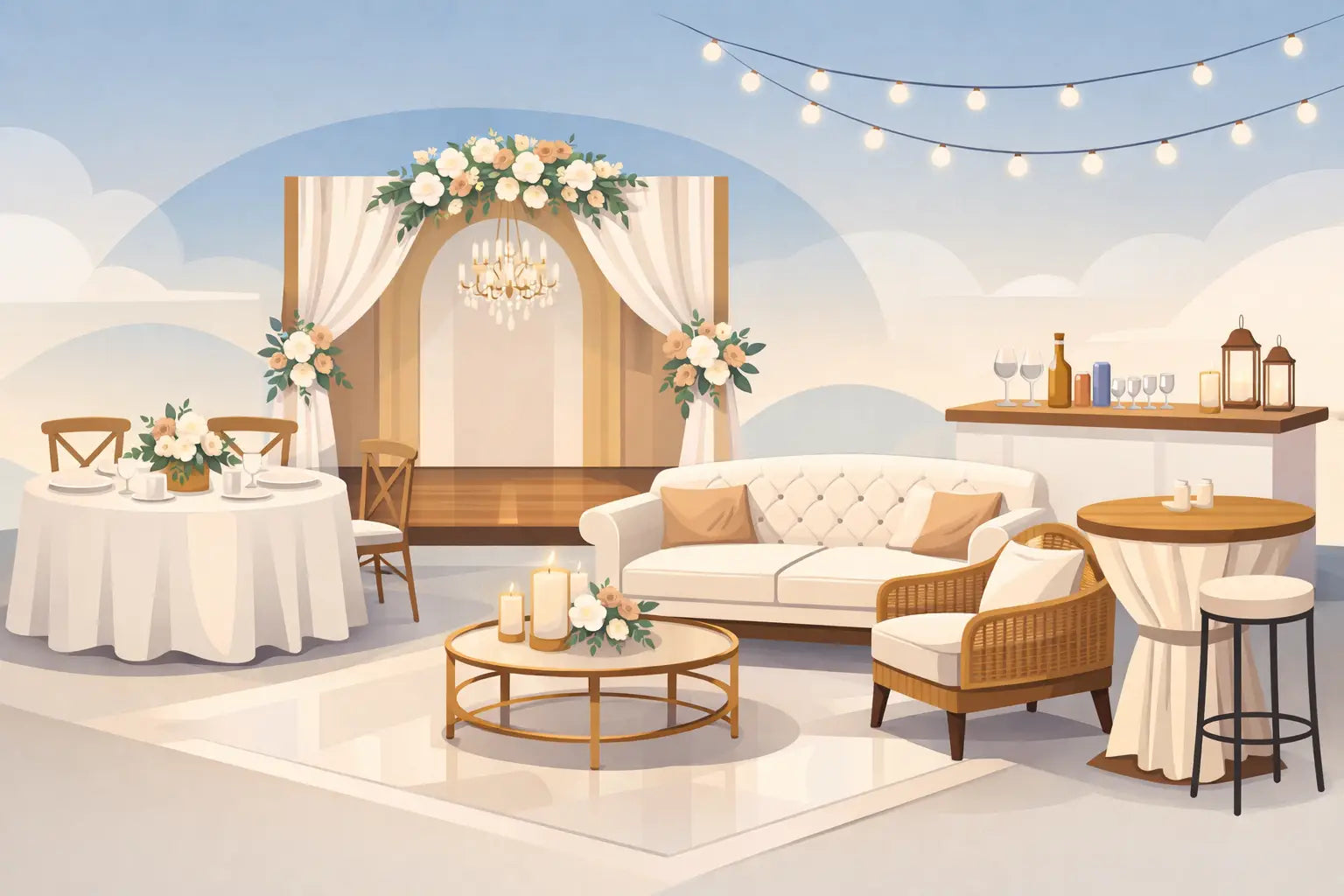
A reception can look fully planned on paper and still fail operationally when the furniture mix is wrong. Too few cocktail tables create crowding at the bar. Lightweight chairs become a liability on uneven ground. Oversized lounge pieces consume valuable tent capacity. The best wedding reception furniture is not simply the most photogenic collection. It is equipment that creates a polished guest setting while standing up to loading, transport, setup, cleaning, and repeat bookings.
What Makes the Best Wedding Reception Furniture?
For rental operators, venues, and event teams, the right furniture starts with versatility. A chair, table, or bar should work across a range of wedding styles without forcing a complete inventory change for every client. It also needs to fit the operating environment, whether that is a ballroom, vineyard lawn, private estate, clearspan tent, or municipal facility.
A practical buying decision balances five factors: guest comfort, visual flexibility, carrying and storage efficiency, serviceability, and expected return on investment. A low-cost piece that chips easily or requires constant replacement rarely delivers value. At the other extreme, highly specialized furniture may command a premium but sit unused outside a narrow group of events. Build the core fleet around high-turn products, then add statement pieces where demand and pricing support them.
Wedding reception furniture should also work together. Matching chair finishes, table heights, linen sizes, bars, flooring, and lounge collections helps a team sell complete packages rather than individual items. This reduces design uncertainty for the client and makes installation more consistent for the crew.
Start With the Reception Layout and Guest Flow
Before selecting styles, establish what the furniture must accomplish. A seated dinner for 150 guests requires a different inventory plan than a 250-person cocktail reception with stations and late-night dancing. Account for the room perimeter, catering access, head table or sweetheart table, gift and cake areas, dance floor, band or DJ footprint, and clear routes for guests and servers.
Table shape drives both capacity and the visual tone of the room. Round banquet tables encourage conversation and remain a dependable choice for formal receptions. Rectangular banquet tables support family-style service, long farm-table looks, and efficient use of narrow tents. Serpentine and specialty tables add interest but require more planning, storage space, and compatible linens.
Do not plan solely around the maximum number of seats that fit. Guests need enough clearance to pull out chairs, servers need workable aisles, and the floor plan needs a comfortable path between the bar, buffet, restrooms, and dance floor. In tented events, tent legs, stakes or ballasts, flooring transitions, and sidewall placement also affect usable space.
Build a Core Seating Fleet First
Chairs are one of the most visible and highest-volume purchases in a wedding inventory. They need to look appropriate in ceremony and reception settings, stack or transport efficiently, and tolerate frequent handling. The best choice depends on your market and the level of service you provide.
Resin folding chairs are a strong core option for weddings because they offer a refined profile, wipe-clean surfaces, and dependable outdoor performance. They suit ceremonies, dinners, and patio receptions, particularly when paired with cushions. Natural wood folding chairs can create a warmer look for rustic, vineyard, garden, and upscale farm-table events, but they require more attention to finish protection and storage conditions.
For banquet halls and higher-volume venue operations, commercial stacking banquet chairs remain a practical workhorse. They are comfortable for longer dinners, efficient to store on carts, and available in finishes that coordinate with many reception palettes. Chiavari-style chairs can still earn their place in a wedding fleet, especially for formal rooms and premium packages, but inspect frame construction, replaceable glides, cushion options, and cart compatibility before purchasing.
Avoid buying seating based only on appearance. Review weight capacity, frame material, connection points, cushion attachment, stack limits, and replacement-part availability. A chair fleet earns its keep when crews can move it quickly and maintain a consistent presentation after hundreds of uses.
Select Tables That Support Multiple Package Levels
A well-rounded table inventory should handle formal dining, buffet service, guest books, cake displays, head tables, and casual gathering areas. Commercial folding tables with durable tops and secure leg mechanisms are foundational because they can be deployed across weddings, corporate functions, and community events.
Round tables in common banquet sizes should form the center of most dinner inventories. Rectangular tables add flexibility for head tables, catering stations, and long communal seating. Cocktail tables are essential for pre-dinner drinks and standing receptions, but purchase enough bases and tops to offer both seated and standing heights where your market calls for them.
Wood farm tables and other exposed-top tables can command higher rental rates, particularly when clients want a natural finish without linens. Their trade-off is operational: they are heavier, take more storage room, and show wear more readily than standard folding tables. They work best as a premium collection, not necessarily as the starting point for a new fleet.
Add Bars, Lounges, and Functional Accent Pieces
Once guest seating and dining tables are covered, the next opportunity is furniture that improves flow and raises the perceived value of the room. Mobile bars are a prime example. A well-built bar gives caterers a defined service point, keeps back-of-house supplies organized, and becomes a visual focal point in a tent or open room. Choose a finish that photographs well and can be styled for different themes, or use modular bar components that can expand for larger guest counts.
Lounge furniture creates useful gathering zones near the dance floor, outdoor patio, or cocktail area. Sofas, loveseats, ottomans, coffee tables, and accent chairs can make a large reception feel intentional rather than empty. However, lounge collections should be scaled carefully. Large upholstered pieces can be difficult to protect in transit and expensive to clean after food and beverage spills.
For many operators, modular lounge seating offers the best balance. It can be configured as a small vignette for an intimate wedding or expanded for a larger event. Select commercial-grade pieces with durable upholstery, manageable individual weights, and dimensions that fit through venue doors and inside delivery vehicles.
Other high-value additions include cake and display tables, ceremony arches or backdrops, staging for head tables, and coordinated dance floors. These items should be considered as part of the reception environment, not as unrelated add-ons. A white resin chair, a neutral bar, wood accents, and a clean dance floor can support dozens of looks when the client changes linens, florals, and lighting.
Prioritize Durability, Transport, and Serviceability
Wedding furniture experiences more wear than showroom furniture. It is moved in and out of trucks, rolled across pavement, used on grass, exposed to moisture, and handled by multiple crews during peak season. Commercial construction matters.
Look for reinforced frames, stable welds or joints, non-marring feet, hardware that can be tightened or replaced, and finishes suitable for repeated cleaning. Purchase compatible carts, dollies, and storage solutions at the same time as the furniture. The right cart protects the product, reduces labor, and improves load-in speed. It also helps prevent the damage that occurs when chairs and tables are stacked improperly in a warehouse or truck.
Replacement parts deserve attention before the first order. Glides, chair cushions, leg caps, locking hardware, and tabletop components are small items, but their availability can extend the useful life of a fleet. Standardizing products across locations or crews makes maintenance easier and avoids a patchwork appearance at events.
Outdoor use requires additional judgment. Furniture placed directly on grass may need tent flooring, ground protection, or a level surface to remain stable. Light-colored seating can heat up in direct sun, while metal components may be uncomfortable in extreme temperatures. The right solution depends on the venue, weather exposure, and how long guests will be seated.
Purchase for Demand, Not Just One Wedding Trend
A growing event business does not need every furniture style at once. Start with the categories that book most often in your market: dependable seating, banquet and cocktail tables, linens, basic bars, and a dance floor system. Then add premium chairs, farm tables, lounge collections, and specialty finishes when existing inquiries show consistent demand.
Track which items are requested, which packages produce the strongest margins, and which products create labor issues. That information should guide the next purchase more than a single season's social media trend. It is also smart to consider inventory availability, freight planning, and whether one supplier can support related categories. Special Event Sales helps professional buyers source coordinated event infrastructure, making it easier to build a reception package around compatible equipment.
The strongest fleet is the one your team can deploy confidently on a busy Saturday. Choose furniture that looks finished in the client photos, performs under real event conditions, and leaves room to grow your offering with every successful reception.