
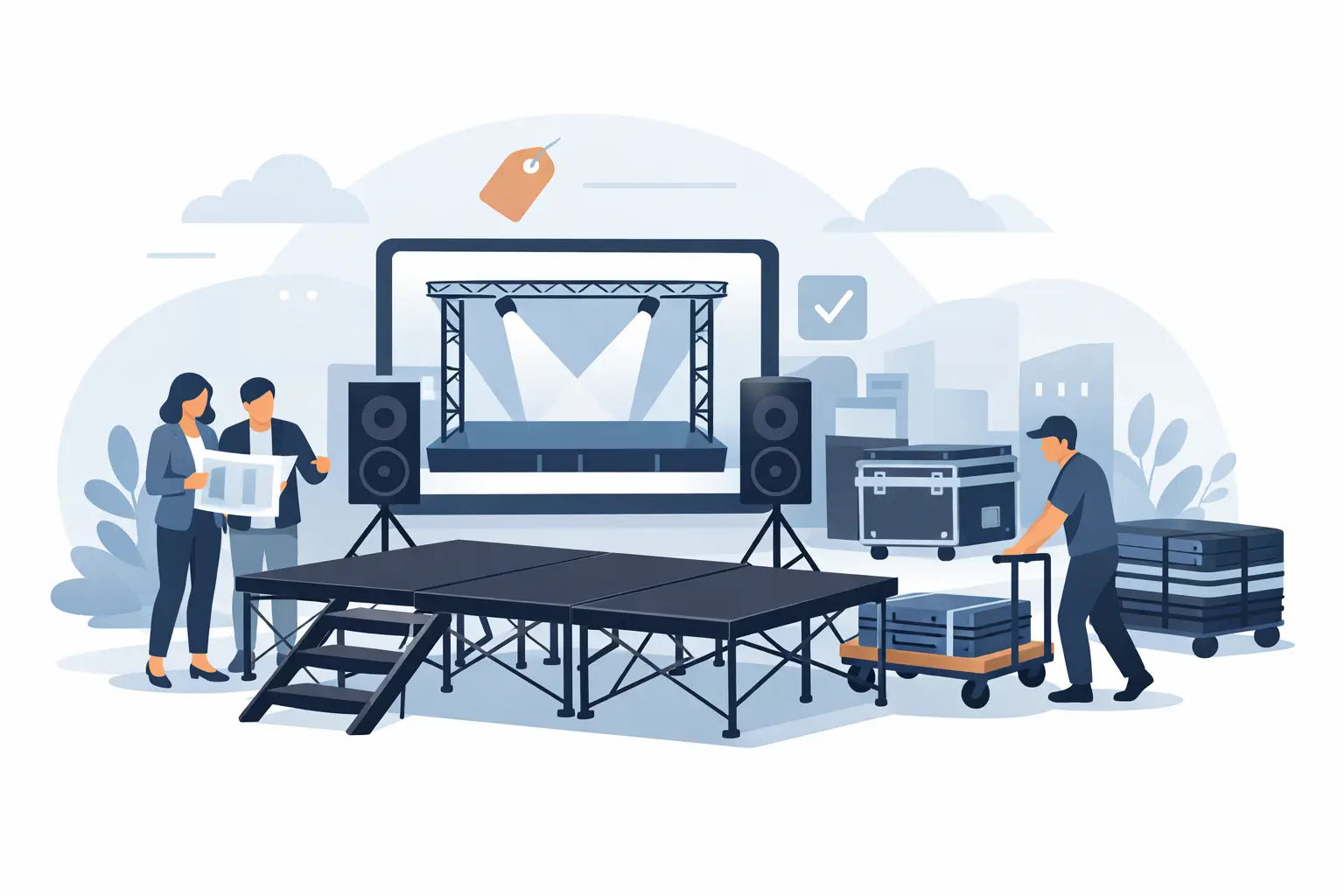
A stage that looks right but takes too long to load, needs a separate tool kit, or cannot adapt to uneven ground will cost more than its purchase price. When comparing portable staging systems for sale, professional buyers need to look beyond the platform size. The right system has to support the intended load, move efficiently between jobs, present well for clients, and remain compatible as your inventory grows.
For rental operators, venues, schools, churches, municipalities, and event production teams, portable staging is a working asset. It may become a concert riser on Friday, a graduation platform on Saturday, and a head-table elevation or fashion runway on Sunday. Buying around that reality helps prevent mismatched decks, difficult storage, and costly replacement purchases later.
Start With the Jobs Your Stage Must Handle
The first question is not, "What is the lowest price per deck?" It is, "What work will this staging system do most often?" A school auditorium may prioritize repeatable assemblies, clean appearance, and safe access for speakers. A tent rental company may need adjustable legs that handle grass, pavement, and minor grade changes. A production company building speaker platforms, DJ booths, and small performance stages may need many configurations from the same deck inventory.
Define the common footprints before choosing a platform size. Modular decks in common dimensions can form square stages, long runways, choir risers, catwalks, and tiered presentation areas with less unused inventory. A deck system that creates a 12-foot by 16-foot stage efficiently may still be a poor fit if your frequent jobs require 8-foot by 24-foot platforms or multiple small risers at the same event.
Also consider who will stand on the stage. A podium and two presenters create a very different load than a drum kit, keyboard rig, dance group, catering display, or full band. Capacity ratings should account for the people, equipment, and dynamic activity expected on the finished platform. Do not assume that a stage suitable for speeches is automatically appropriate for active performance use.
Compare Portable Staging Systems for Sale by Build Quality
A commercial stage system earns its keep through repeated transport, assembly, disassembly, and storage. Look closely at the deck frame, connection points, leg receivers, surface material, and edge protection. These are the areas that see daily handling and determine whether platforms continue to fit tightly after a busy season.
Deck surface and appearance
The deck surface affects traction, cleaning, visual presentation, and rental appeal. Carpeted decks can provide a finished look for indoor presentations and formal events, while non-slip finishes are often preferred where footwear, moisture, or frequent outdoor use are expected. Some operators carry different surface styles because corporate meetings, school events, and live entertainment do not always call for the same visual finish.
A darker stage surface can hide scuffs and coordinate with most event environments. However, light-colored tent interiors, wedding settings, and branded installations may benefit from skirting or decorative fascia to create a more finished edge. Plan for the complete guest-facing appearance, not only the platform itself.
Frame, locks, and connection hardware
Platform frames should be designed for commercial loading and repeated use. Inspect how decks lock together and how legs attach. A system with clear, secure connections reduces movement between decks and helps crews build consistent layouts. It also makes troubleshooting easier when multiple teams are setting up equipment.
Compatibility matters just as much as strength. Proprietary decks, steps, guardrails, and legs can be a good choice when the manufacturer offers dependable ongoing availability. Before committing, confirm that you can purchase matching components, replacement parts, and expansion decks when your fleet needs to grow.
Height Options Change What You Can Sell
Stage height is one of the largest factors in usability. Low platforms work well for modest audience sightlines, camera risers, band setups, and accessible event layouts. Taller stages create stronger visibility for audiences, but they require more attention to stairs, handrails, guardrails, skirting, stability, and local safety requirements.
Adjustable-leg staging offers flexibility when crews work on grass, patios, tent floors, gymnasiums, and other variable surfaces. That flexibility comes with a trade-off: adjustable systems usually require more planning during setup and careful leveling. For operators that repeatedly build on a fixed indoor floor, fixed-height risers may be faster and simpler to deploy.
Think through access early. A stage is not complete when the decks are connected. Stairs need appropriate tread depth and a stable attachment method. Handrails may be required or strongly advisable depending on height and use. Ramps may be needed for accessibility or rolling equipment. Guardrails are particularly important on exposed sides of elevated platforms, especially when performers, guests, or staff may move near an edge.
Transport and Storage Are Part of the Purchase Decision
Portable staging only produces revenue when crews can move it efficiently. A deck that requires two people to handle may be appropriate for large production jobs, but it can slow down smaller crews and tight venue load-ins. Review individual deck weight, folded or stacked dimensions, and whether carts are available for the system.
Purpose-built storage carts help protect deck edges, organize legs and accessories, and speed up warehouse pulls. They also reduce the chance that a crew mixes parts from incompatible systems. If staging will travel in box trucks or trailers, map out cart dimensions against your actual vehicle doors, ramp capacity, tie-down points, and storage plan.
Do not overlook the accessory inventory that travels with the decks. Legs, braces, stairs, rails, connectors, skirt hardware, and leveling components can become operational bottlenecks when they are stored loose or counted inconsistently. Keeping each component family organized by system and height makes dispatch faster and prevents incomplete deliveries.
Build a System, Not a Single Stage
The most useful staging purchase starts with a core deck quantity and expands through accessories. Rather than purchasing only enough decks for one attractive showroom layout, build around the configurations you expect to rent or operate. A small quantity of standard decks, several leg-height options, stairs, rail sections, and transport carts can often generate more usable layouts than a larger pile of platforms with no supporting hardware.
For example, a venue may benefit from a permanent-looking presentation stage with skirting and dedicated stairs. A rental company may get more value from modular decks that split into several smaller platforms on the same weekend. A tent operator may prioritize adjustable legs, leveling capability, and components that work cleanly with tent flooring. The best choice depends on the revenue model and job mix.
It is also wise to standardize wherever possible. One deck family across multiple stage sizes simplifies crew training, parts management, and purchasing. Standardization can be especially valuable during peak season, when a damaged leg or missing connector should be replaceable without holding up an installation.
Safety Planning Protects the Event and the Asset
Portable staging should be assembled on a suitable, stable surface and used within its stated limits. Crews need clear procedures for leveling, connecting decks, installing access components, and checking all exposed edges before guests or performers arrive. This is not an area for improvised hardware or mixed components that were not designed to work together.
Outdoor applications deserve added scrutiny. Weather, soft ground, uneven pavement, wind exposure, cable routing, and changing foot traffic can all affect the finished setup. If the stage is part of a tented event, coordinate it with flooring, sidewalls, seating layouts, lighting, and emergency access before the crew reaches the site.
Good staging practices also protect the long-term value of the equipment. Clean decks after use, inspect frames and connectors, replace worn parts promptly, and store platforms dry and supported. A well-maintained commercial system remains safer, looks better in client photos, and holds up better through repeated rental cycles.
Purchase for Expansion and Operational Readiness
Price matters, but the lowest initial cost can become expensive if the system lacks available accessories, replacement components, or a practical expansion path. Ask about in-stock deck sizes, matching legs, rails, stairs, carts, and compatible skirting options. If you expect to add inventory over time, confirm that the product line will support that plan.
Special Event Sales helps professional buyers source staging alongside the related equipment that completes an event environment, including tent flooring, pipe and drape, dance floors, furniture, and transport solutions. Purchasing connected categories from a knowledgeable equipment supplier can reduce compatibility questions and simplify procurement.
Before placing an order, sketch the stage footprints you sell most often, count the accessories each layout requires, and verify how the full package will ship, store, and travel. A portable stage should make your crew faster, give clients confidence, and leave room for the next opportunity on your calendar.