
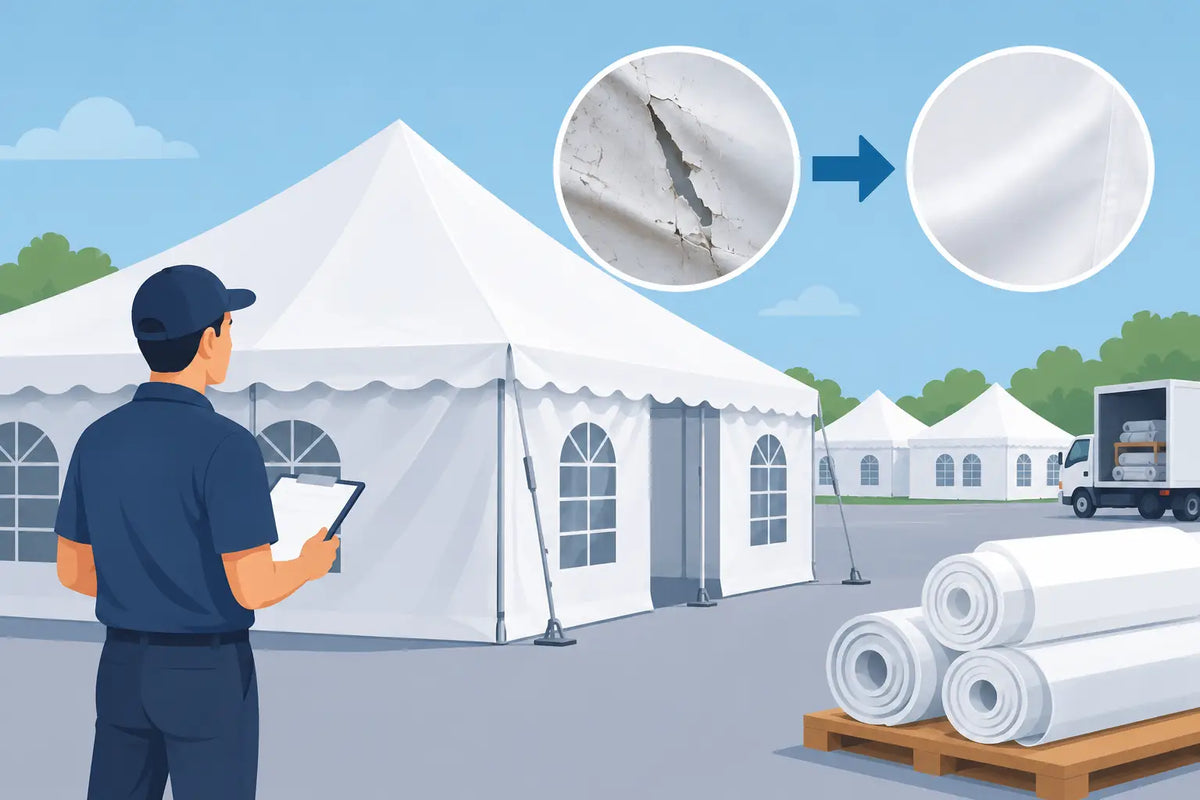
A tent top can look acceptable in the warehouse and still fail the moment it is tensioned over a frame. A small tear at a ratchet point, a weakened weld seam, or a sticky coating can turn a routine installation into a delay, a customer complaint, or an unsafe setup. Knowing when to replace tent vinyl is less about finding one expiration date and more about evaluating how the material performs under real rental conditions.
For rental operators, venues, and event teams, vinyl replacement is an operational decision. The right time is before appearance, weather resistance, fit, or compliance becomes uncertain. A disciplined inspection process protects your crews, preserves the appearance of your fleet, and prevents one tired top or sidewall from taking a tent out of service during peak season.
When to Replace Tent Vinyl Instead of Repairing It
Repair is often the right first response to isolated damage. A clean puncture away from stress points, a small tear that can be professionally patched, or a damaged strap on an otherwise sound top may not justify replacing the full panel. The key question is whether the problem is contained or whether it signals broad material fatigue.
Replace the vinyl when damage reaches load-bearing areas such as keder edges, reinforced corners, webbing attachment points, ratchet pockets, grommet lines, or frame-contact zones. These areas transfer tension from the tent structure to the fabric. A patch may improve appearance, but it cannot always restore the original strength or distribute load as the manufacturer intended.
Replacement is also the better decision when repairs begin to accumulate. One visible patch can be acceptable on a utility sidewall. Multiple patches, repeated seam repairs, or recurring tears in the same area usually mean the material has reached the end of its productive rental life. At that point, labor and downtime can cost more than ordering a compatible replacement top or wall.
8 Signs Your Tent Vinyl Is Near End of Service
1. The coating feels sticky, brittle, or unusually stiff
Commercial tent vinyl relies on its coating to shed water, resist abrasion, and remain flexible through repeated setup and storage. When the surface becomes tacky, chalky, cracked, or noticeably stiff, the material may be degrading from UV exposure, heat, cleaning chemicals, or age.
Flexibility matters most in folds, tension points, and cold-weather installations. Vinyl that is stiff when unfolded is more likely to crack or split when crews tension the top. Do not assume a surface treatment will restore structural life. Cleaning can improve presentation, but it cannot reverse widespread coating breakdown.
2. Welded seams are separating or showing stress
Inspect every welded seam, especially around peaks, valleys, corners, keder pockets, and reinforcement patches. Look for lifting edges, pinholes, wrinkling, discoloration, or sections where the seam pulls apart when gently flexed.
A seam issue in a low-stress sidewall may be repairable. Separation along a roof panel, at a peak, or near a tensioned edge deserves more caution. Water intrusion and wind loading can quickly enlarge a small failure once the tent is installed.
3. Tears keep returning at the same stress point
A tear caused by a forklift tine or a sharp object has a clear cause. Repeated tears at the same corner, buckle point, or frame contact area tell a different story. The vinyl may be thinning, the reinforcement may be failing, or the tent may be installed with incorrect tension or incompatible hardware.
Before ordering a replacement, confirm the underlying cause. Check frame alignment, ratchet condition, straps, buckles, keder rails, and proper top sizing. A new top installed over a bent frame or worn fitting will wear prematurely too.
4. Water is leaking through sound-looking material
Leaks do not always begin with a visible hole. Aging vinyl can lose water resistance around seams, folds, abrasion points, and porous areas created by coating wear. During inspection, clean the top, set it up under proper tension, and test suspicious areas with controlled water exposure.
If leaks appear across multiple sections or return after reasonable repairs, replacement is usually the more dependable option. For a wedding, catered dinner, or equipment-sensitive event, a roof that is merely “mostly dry” is not a rental-grade solution.
5. The tent no longer tensions or fits correctly
Stretching, shrinkage, distorted keder edges, or warped panels can make a top difficult to install. Crews may need excessive force to engage ratchets, or the roof may sag despite correct assembly. Sidewalls may no longer align with legs, zippers, or adjoining panels.
Do not treat poor fit as a cosmetic inconvenience. Uneven tension changes how the cover sheds water and responds to wind. It also slows installation and encourages crews to over-tension vulnerable areas. Verify that you are using the correct top for the exact tent series, width, length, and frame configuration before declaring the vinyl worn out.
6. UV fading has become material deterioration
Color fade alone does not automatically mean replacement. A white top may yellow slightly after years of service, while colored or striped vinyl can lose visual consistency long before it loses basic weather resistance. For premium weddings, hospitality installations, and branded events, appearance may be enough reason to retire a visibly tired panel.
The concern rises when fading comes with thinning material, brittleness, surface cracking, or weakened reinforcements. Compare high-exposure areas with protected sections under hems or overlap points. A dramatic difference often indicates prolonged UV wear rather than simple surface dirt.
7. Mold stains or odor cannot be fully removed
Tent vinyl must be completely dry before it is folded and stored. If moisture remains trapped, mildew can stain the surface, create persistent odors, and eventually affect customer confidence in the equipment. Severe contamination can also develop in folds and seams where cleaning access is limited.
Professional cleaning may recover a stained top, so replacement is not always immediate. But if odor returns, stains are widespread, or the material has become difficult to sanitize for foodservice and hospitality use, retiring the piece may protect the rest of your inventory. Store replacement vinyl clean, dry, and off the floor to avoid repeating the problem.
8. Fire documentation is missing, damaged, or no longer adequate
Many jurisdictions, venues, and event clients require tent fabric to carry current flame-resistance documentation or identifiable labels. A top may still look serviceable, but missing labels, unreadable markings, or incomplete records can make it unsuitable for permitted use.
Requirements vary by location and application, so confirm what the authority having jurisdiction, venue, insurer, or client requires. Keep fabric certifications and purchase records organized by tent model and panel. If compliance cannot be verified, replacement may be the practical choice, particularly for public events and commercial installations.
Build Inspection Into Your Turnaround Process
The most effective time to find vinyl problems is not during setup. Inspect tent tops and sidewalls when they return, while they are being cleaned, and again before they are loaded for the next job. This gives your team time to separate repairable pieces from inventory that should not be dispatched.
A useful inspection includes the full roof surface, seam lines, reinforcement patches, webbing, straps, buckles, grommets, keder edges, zippers, and areas that contact the frame. Record the tent size, model, damage location, and decision made. Photos are helpful when different crew members handle receiving, repairs, and outbound loading.
For high-volume fleets, tag equipment by condition. A simple system such as ready to rent, repair pending, inspection hold, and retire prevents questionable vinyl from returning to circulation. It also makes capital planning more accurate because you can see which sizes and styles are aging out before the busy season arrives.
Choosing the Right Replacement Tent Vinyl
Replacement vinyl must match more than the nominal tent width. Confirm the manufacturer or compatible tent series, frame type, length, peak configuration, attachment method, keder size, hardware placement, and whether the item is a roof, gable, solid sidewall, window sidewall, or custom panel. Similar-looking tent systems are not always interchangeable.
Consider how the replacement will be used. A standard white roof may suit general rentals, while clear tops, window sidewalls, or branded color options support higher-value event packages. If your fleet sees frequent transport and setup, prioritize commercial-grade material, reinforced stress points, and readily available replacement components over the lowest initial price.
Special Event Sales can help professional buyers identify tent components and related equipment for a more complete replacement plan. When ordering, have measurements, photos, tent model details, and any existing part numbers ready. That information reduces compatibility errors and helps keep the tent back in service faster.
A tent cover does not need to be completely destroyed before it is retired. Replace it when its condition creates doubt about weather protection, safe tensioning, professional presentation, or permitted use. The best replacement decision is the one made in the warehouse, with time to confirm fit and inventory, rather than under pressure at an event site.