
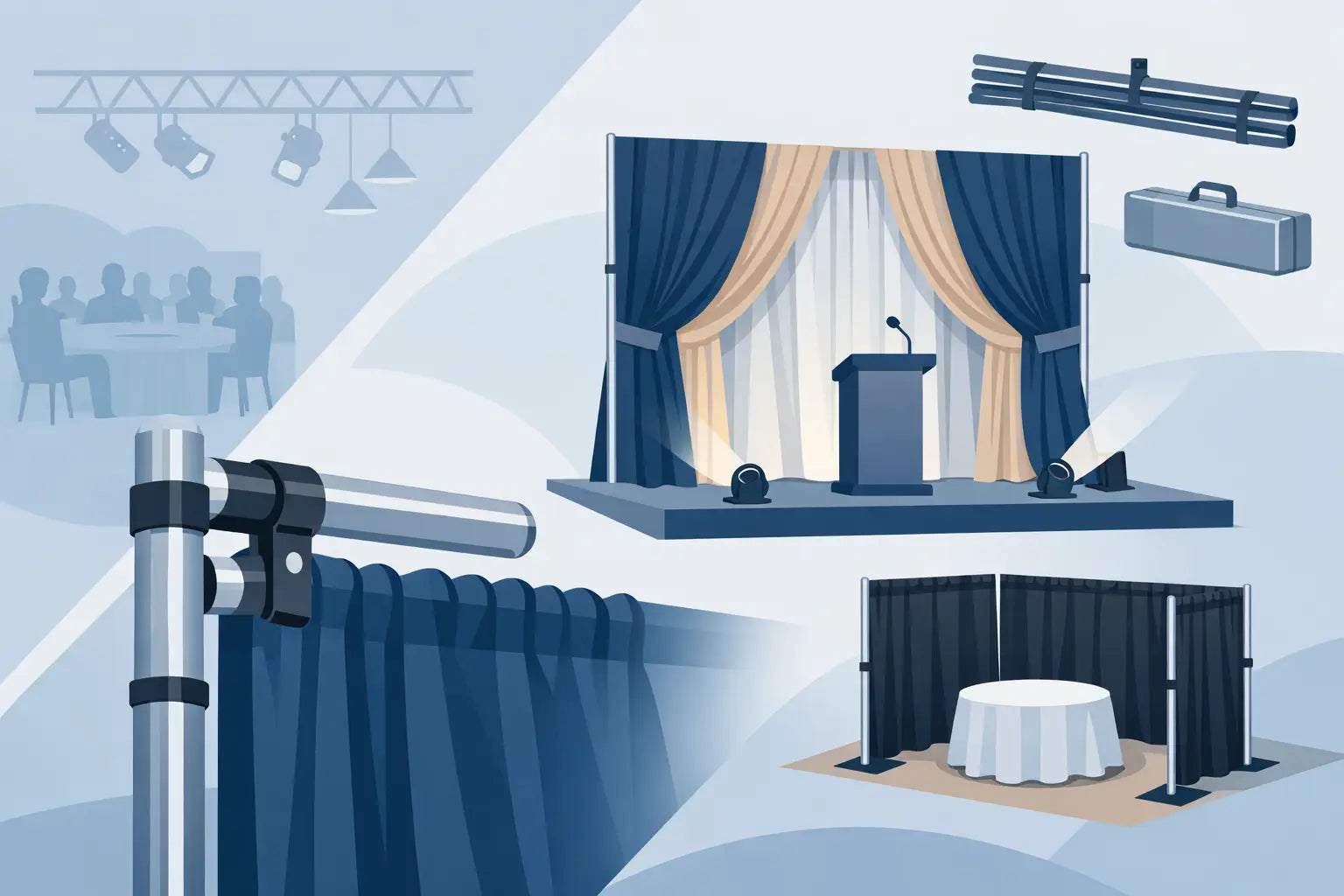
A pipe and drape system can turn an open hall, tent, ballroom, gymnasium, or trade show floor into a finished event environment in a few hours. But pipe and drape kits are not interchangeable. For rental operators, venues, caterers, and production teams, the right system needs to look professional, fit the room plan, travel well, and stand up to repeated handling without creating a labor problem.
The purchase decision starts with the work the system must perform. A black backdrop behind a stage has different requirements than 10-foot drape used to divide a ballroom, conceal catering operations, build trade show booths, or create an entry treatment. Buying commercial-grade components around those requirements helps avoid mismatched hardware, insufficient coverage, and last-minute substitutions during setup.
What Commercial Pipe and Drape Kits Must Include
A functional kit is a coordinated system, not simply fabric and metal poles. It requires bases, uprights, adjustable crossbars, drape panels, and a practical way to transport and store the components. Each piece affects setup speed, stability, appearance, and the ability to expand inventory later.
Base plates carry the load of the upright and drape. Heavier bases provide more stability, particularly when using tall uprights, full drape, or configurations exposed to guest traffic. Flat steel bases are common because they stack efficiently and keep the floor area relatively clear. For finished venues, consider whether the base design needs protective features to reduce the chance of floor damage.
Uprights determine finished height. Adjustable telescoping uprights offer flexibility for operators serving different rooms and event types, while fixed-height uprights can make sense for standardized venue applications. Crossbars should adjust across the widths you use most often. Adjustable telescopic drape supports reduce the number of separate pieces required in the warehouse and make on-site changes easier.
Drape is where the visual result is won or lost. A panel must be wide enough to provide proper fullness, tall enough to meet the intended finish height, and suitable for its application. A light fabric may be appropriate for decorative accents, while heavier banquet, velour, or plush drape can provide better opacity and a more formal look. The correct choice depends on whether the goal is décor, visual separation, light control, or hiding equipment and service areas.
Start With the Floor Plan, Not the Kit Price
The lowest-priced package is rarely the best value if it leaves gaps in coverage or requires additional pieces for every job. Measure the linear footage to be covered, then identify the desired finished height and the locations of doors, exits, electrical access, and ceiling obstructions.
For a straight run, the number of upright positions is based on the number of sections plus one. A 40-foot wall built in 10-foot sections needs five uprights, five bases, and four crossbars. Corners require additional planning because a single upright can sometimes support two directions, but the drape and support layout must be considered carefully to maintain a clean finish.
Drape width should be calculated using finished coverage, not the panel’s flat fabric width alone. Fullness creates the gathered appearance expected at weddings, banquets, and formal functions. Using drape nearly flat may save fabric, but it can look thin, allow light through, and reveal what the backdrop is meant to conceal. For basic utility partitions, less fullness may be acceptable. For premium décor packages and stage backgrounds, plan for a fuller presentation.
Height needs the same attention. A 10-foot upright does not automatically mean a 10-foot finished drape wall. Account for the crossbar position, the drape header, uneven floors, and the desired clearance at the bottom. If a venue regularly uses 8-foot ceilings, purchasing only taller drape may create excess fabric pooling. If your work includes ballrooms, tents, and convention facilities, adjustable uprights paired with several common drape heights can provide a more usable inventory mix.
Choose Hardware for Repeated Setup Cycles
Commercial event equipment earns its value over hundreds of load-ins, not one installation. Look for durable steel components, reliable adjustment mechanisms, and dimensions that work with your existing carts, storage racks, and trucks. A system that is technically functional but awkward to move can increase labor costs on every job.
Weight is a trade-off. Lighter components are easier for crews to carry, but bases must still provide enough stability for the installed height and drape weight. Taller applications and busy public areas generally call for more substantial base support. Operators should also consider how the system behaves when guests brush against drape, when a door opens nearby, or when a long run is installed on slightly uneven flooring.
Compatibility matters as inventory grows. Standardizing on compatible uprights, base pins, and adjustable crossbars helps crews pull equipment faster and reduces the number of exceptions they need to remember. It also makes replacement purchasing more straightforward. A damaged base, upright, or crossbar should be replaceable without forcing a complete system change.
Storage deserves attention before the order is placed. Pipe can become difficult to count and easy to damage when stacked loosely. Drape needs clean, dry storage away from moisture, dust, and snag hazards. Purpose-built carts, bins, or rolling storage solutions protect inventory, speed loading, and improve counts before high-volume weekends.
Match Drape Fabric to the Job
Drape fabric affects both the saleable appearance of an event package and the operational workload behind it. Black is a practical foundation color for stage masking, AV concealment, room division, and trade show applications. White, ivory, and neutral tones are popular for weddings, hospitality spaces, and upscale receptions. Color inventory can expand later once the core system is generating consistent use.
Opacity is a critical factor for back-of-house concealment and stage applications. If the purpose is to hide stacked chairs, catering prep, electrical distribution, or production equipment, test whether the fabric shows silhouettes under normal venue lighting. Layering panels can improve coverage, but it also increases fabric requirements and setup time.
Fire ratings should be reviewed before purchasing drape for public events. Many venues, schools, convention facilities, and municipalities require documentation for flame-resistant materials. Keep certifications organized with the inventory records so crews and event managers can respond quickly when a venue requests them. Requirements vary by jurisdiction and facility, so confirm the specifications required for your typical market.
Cleaning and maintenance also affect profitability. High-touch drape used at frequent events needs a realistic cleaning process and clear inspection standards. Remove damaged panels from circulation promptly, repair minor issues where appropriate, and avoid storing damp fabric after an outdoor or tented event. A clean, consistent drape inventory protects the perceived value of the entire installation.
Build an Inventory That Can Scale
Growing operators often benefit from beginning with a core package sized for their most common jobs, then adding components in repeatable modules. For example, standardizing around 8-foot or 10-foot sections makes it easier to add linear footage as bookings increase. The same approach works for trade show booths, pipe-and-drape partitions, wedding backdrops, and temporary dressing rooms.
A practical initial inventory should account for more than the maximum straight run. Include enough extra uprights and bases for corners, returns, entry openings, and replacements. Spare hardware is especially valuable when multiple crews are working at separate sites. A missing base or bent upright can delay an entire installation, even when the rest of the equipment is on the truck.
Before finalizing a purchase, review these operational questions:
- What are the most common room heights and linear footage requirements?
- Will the system be used for black masking, décor backdrops, trade show booths, or all three?
- Do regular venues require flame-resistant documentation?
- Can the components fit existing carts, shelving, and vehicle layouts?
- Are replacement parts and additional matching components available when demand increases?
Plan for Faster, Cleaner Installations
Consistent setup procedures help protect equipment and create better results. Crews should lay out bases from the floor plan, install uprights, set crossbars to the required width, and then hang drape in a controlled sequence. For long runs, checking alignment early prevents a gradual drift that leaves an awkward gap or forces the final section out of position.
Use sandbags or additional stabilization only where appropriate for the application and venue rules. Never obstruct required exits, accessible routes, or emergency equipment. When pipe and drape is used near public circulation areas, position bases thoughtfully and communicate the layout with the venue team.
For buyers building or refreshing a fleet, Special Event Sales can help identify commercial components, compatible drape options, and practical quantities for the work your team performs. The best system is the one that crews can install confidently, venues can approve quickly, and customers notice for its clean finished appearance.