
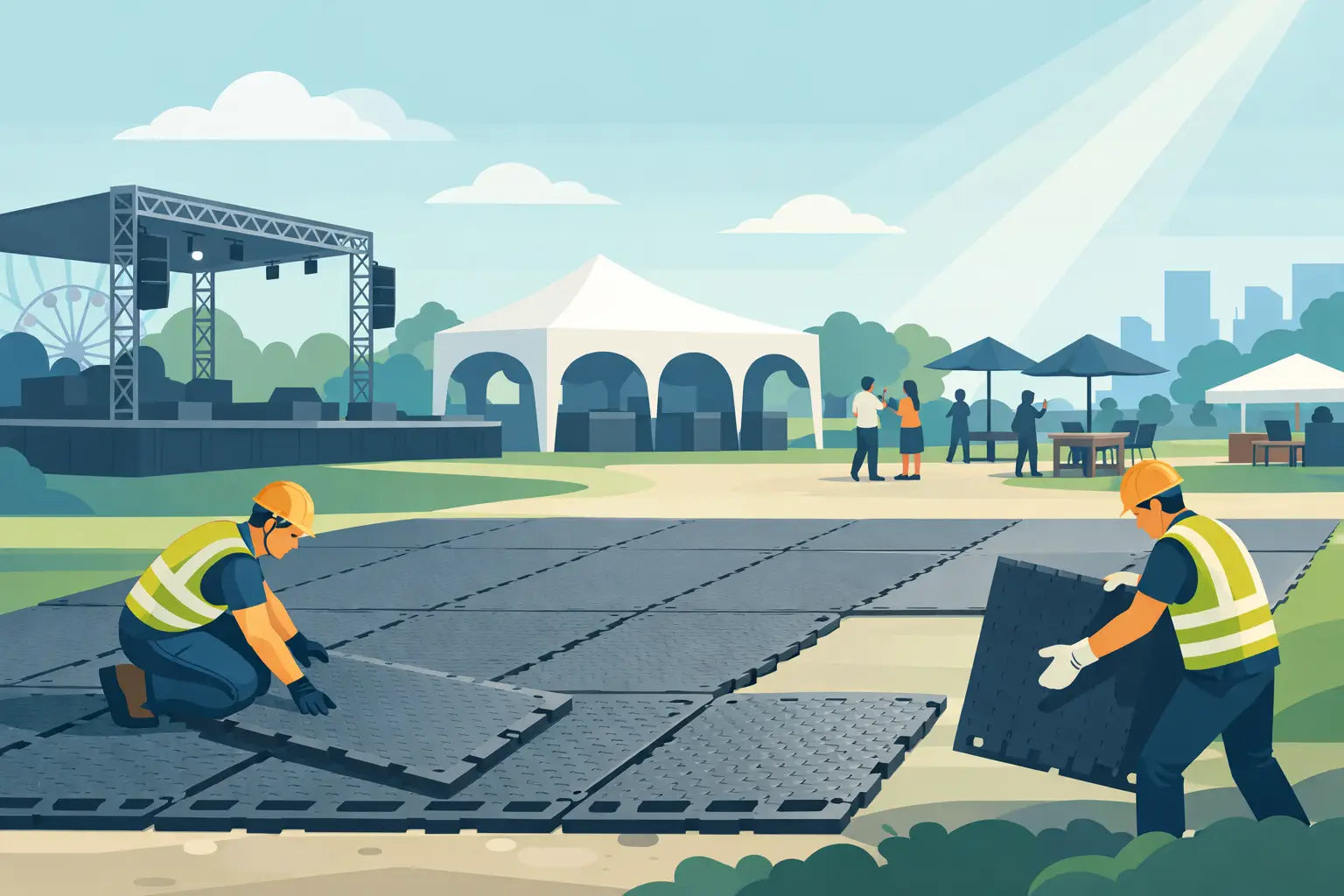
A delivery truck leaves ruts at the tent entrance. A rolling bar sinks into wet turf. Guests track mud across a venue floor before dinner service begins. These are the operating problems event ground protection mats are built to prevent. For rental companies, venues, municipalities, and production teams, the right mat system protects the site while creating a safer, more workable surface for equipment, staff, and guests.
The purchase decision is not simply about covering grass. Ground conditions, traffic type, load weight, installation speed, storage space, and appearance all affect which system will perform well. A lightweight pedestrian pathway can be a cost-effective solution for a garden wedding, but it is not a substitute for a vehicle-rated roadway. Matching the mat to the job protects both your equipment investment and your client relationship.
Start With the Traffic, Not the Event Type
A festival, wedding, tent installation, or corporate event can all require ground protection, but the critical question is what will cross the protected area. Begin by separating pedestrian traffic from rolling equipment and vehicle access.
Pedestrian mats are designed to create walkable routes over grass, soil, gravel, or uneven ground. They can reduce trip hazards, limit turf wear, and provide a cleaner approach to tents, restrooms, staging, or food service areas. For public-facing routes, traction and a flat, secure installation matter as much as the mat's appearance.
Rolling equipment requires a more rigid surface. Think of loaded carts, portable bars, catering equipment, forklifts, scissor lifts, tent-installation gear, and staging carts. Small caster wheels concentrate force in a limited area, so a mat that looks adequate under foot traffic may flex, separate, or sink when loaded equipment crosses it.
Vehicle access is its own category. Delivery vans, pickup trucks, trailers, emergency vehicles, and heavy installation equipment demand properly rated panels and a planned route. The mat must spread load over a larger area while keeping tires from spinning or cutting into the surface. If the route will support heavy equipment, confirm the system's load rating, connection method, and recommended ground conditions before committing to a layout.
How to Choose Event Ground Protection Mats
The best event ground protection mats balance surface protection with operational efficiency. A system that is strong but difficult for a two-person crew to handle may slow every installation. A lightweight mat that installs quickly may be ideal for walkways but unsuitable for a high-volume rental fleet that regularly supports vehicles.
Consider the ground underneath
Firm, dry turf responds differently than saturated soil, sand, clay, or gravel. Mats distribute weight, but they do not turn unstable ground into an engineered roadway. On wet or soft sites, use wider coverage, minimize turning movements, and avoid placing concentrated loads near slopes or drainage areas.
Grass protection also depends on duration. A one-day event may need a simple access path. A multi-day tented installation can trap moisture and limit sunlight, increasing the chance of turf discoloration. When site restoration matters, plan routes carefully, avoid unnecessary coverage, and remove mats as soon as the event schedule allows.
Match surface texture to the use case
Textured surfaces improve footing for guests and workers, especially where rain, mud, or beverage spills are possible. For pedestrian areas, a comfortable walking surface with reliable traction is usually the priority. For equipment and vehicle routes, aggressive traction can be more important, particularly on grades or damp ground.
There is a trade-off. Deep traction patterns can collect dirt and take longer to clean, while smoother surfaces may be easier to maintain but offer less grip in poor weather. For a rental inventory, evaluate how the mat will look after repeated loading, cleaning, stacking, and transport - not only how it looks on a new installation.
Evaluate panel size and handling
Large panels can cover ground quickly and reduce the number of seams. They can also require more labor, dedicated carts, or machinery to move safely. Smaller panels are easier to carry, fit through restricted access points, and adapt around landscaping, but they create more connections and take longer to install.
This is often where fleet operations make the decision. If crews frequently install access routes at parks, backyards, and venues with narrow gates, manageable panel sizes may deliver better real-world productivity. If the work involves long, open runs for tent crews or event load-in, larger-format panels may be more efficient.
Do not overlook connections and edges
A mat system is only as reliable as its installed layout. Interlocking or connected panels help prevent separation under rolling traffic and reduce movement at seams. Edge pieces, transition ramps, and properly aligned joints make a noticeable difference for carts, wheelchairs, strollers, and high heels.
Avoid creating abrupt edges at tent entrances, service doors, or public walkways. A clean transition reduces trip risk and makes the installation look intentional. On sloped sites or exposed routes, follow the manufacturer's guidance for anchoring or securing the system without creating damage to the underlying surface.
Plan the Layout Before Equipment Arrives
Ground protection performs best when it is part of the site plan, not an emergency add-on after rain arrives. Map the route from truck access to the tent, staging area, kitchen, restrooms, and loading zone. Identify where equipment must turn, pause, or pass other crews.
For a tent installation, protect the main vehicle path and the areas where frames, flooring, generators, and sidewalls will be staged. For catered events, protect the route from kitchen or loading area to service points. For public events, create clear pedestrian corridors that keep guests off soft or damaged turf.
Leave room for drainage and avoid blocking utility access. If mats will sit beneath temporary flooring, tents, or other structures, confirm the sequence of installation so crews are not lifting and relaying panels unnecessarily. A few minutes of layout planning can prevent hours of rework on site.
Build a System That Works With Your Inventory
For rental operators, ground protection is not a one-event purchase. It is a fleet category that must travel well, store efficiently, and remain serviceable through a busy season. Standardizing on compatible panel sizes, connectors, ramps, and transport carts can simplify crew training and reduce missing-part issues.
Storage deserves attention. Mats should be cleaned and dried before stacking, particularly after wet-site use. Mud buildup adds handling weight, hides surface damage, and can transfer to customer sites. Designate a return-inspection process that checks for cracked panels, worn connections, and damaged edges before the next dispatch.
Replacement availability is equally practical. Systems with replaceable components can help protect your capital investment when a single panel is damaged. Keeping common connectors and edge pieces in stock can prevent a small shortage from delaying a full installation.
Safety and Site Protection Go Together
Ground mats support safer operations, but they do not eliminate the need for site-specific judgment. Inspect the route before installation and again after heavy rain, vehicle traffic, or major changes in event operations. Watch for shifting seams, soft spots, standing water, and edges that have lifted under traffic.
Use a conservative approach when the consequences are high. Emergency access, public egress, elevated equipment, and heavy vehicle routes may require additional planning beyond a standard mat layout. Weight distribution, turning radius, slope, and local site requirements all matter.
For public-facing events, accessibility should be considered early. A route that is technically covered but difficult to cross with a wheelchair, stroller, or rolling cart is not doing its job. Level transitions, secure joints, and a route wide enough for expected traffic improve both guest experience and operational flow.
Buy for the Jobs You Actually Run
It is easy to overbuy based on the heaviest possible scenario, and just as easy to underbuy based on the easiest one. A growing event company may be better served by a versatile pedestrian and light-equipment system first, then add vehicle-rated capacity as tent and infrastructure work expands. A tent-rental operator with frequent load-ins on parks and private estates may need heavy-duty access coverage from the start.
Review your last season's problem sites. Look for recurring issues: rain-softened lawns, long equipment routes, golf-course restrictions, narrow backyard access, mud at tent doors, or damage claims after vehicle load-in. Those patterns will tell you where event ground protection mats can produce the fastest return.
When a jobsite needs to stay presentable, accessible, and workable under pressure, treat ground protection as operating equipment - not an afterthought. Choose a system your crew can install correctly, transport efficiently, and rely on when the weather and schedule stop cooperating.