
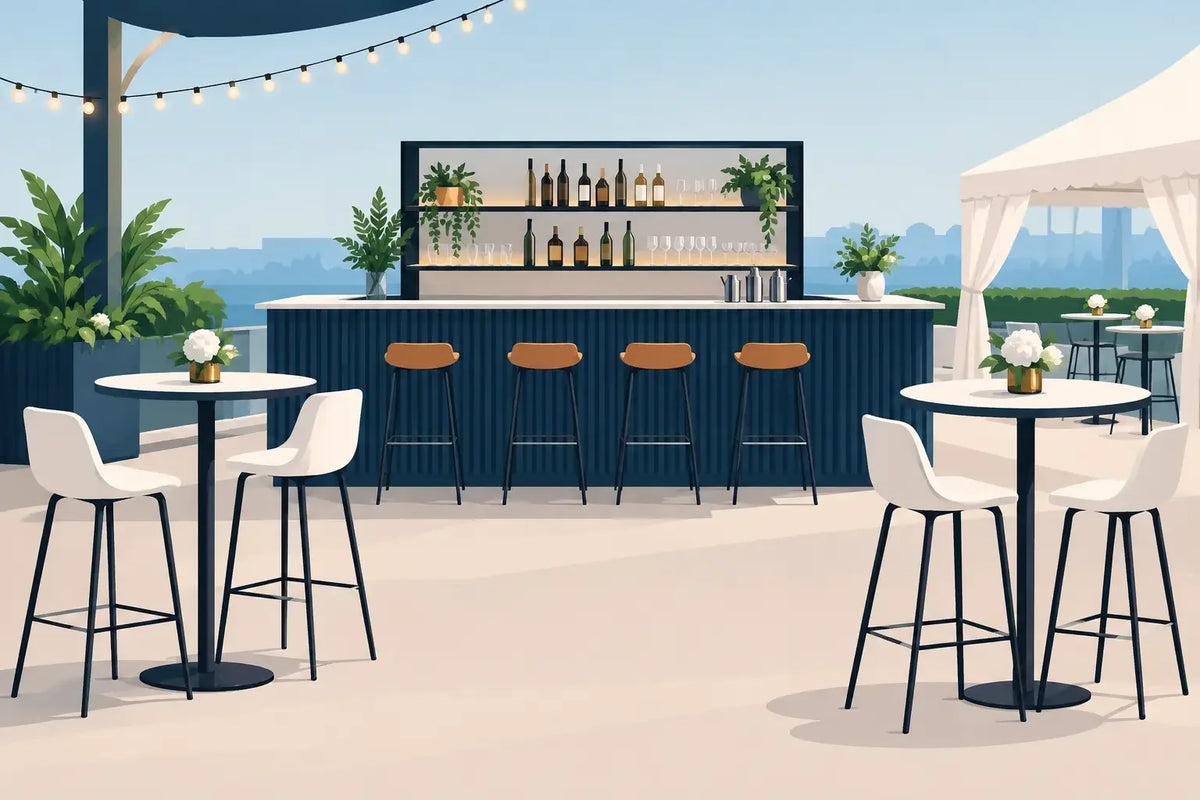
Commercial Bar Furniture Guide for Event Pros

A bar area can move hundreds of guests through a reception, festival, hotel function, or corporate event in a single evening. It also takes some of the hardest use in the room. A commercial bar furniture guide should therefore start with operations, not looks: How will the equipment be moved, assembled, cleaned, stored, and used again next weekend?

For rental operators, venues, caterers, and event teams, the right mix of portable bars, bar-height tables, stools, and lounge pieces creates a polished service area without slowing down setup. The best purchase is rarely the lowest-priced unit or the most decorative one. It is the furniture that fits the event format, carries commercial use, and works with the inventory already on hand.

Start With the Bar Service Model

Before selecting finishes or stool styles, define what the bar must do. A cash bar at a public festival needs speed, clear guest flow, and a work surface that supports point-of-sale equipment, ice bins, and supplies. A wedding bar may need a finished front that photographs well, along with enough back-bar workspace for two bartenders. A hotel banquet bar may need to roll from storage to ballroom and match existing décor.

Think through service from both sides. Guests need a visible ordering point and enough space to stand without blocking entrances or buffet lines. Bartenders need clear work zones, protected storage, and a practical path for restocking. A beautiful front panel does not solve a cramped service area.

For portable applications, modular bars are often the most flexible investment. They can be configured as a straight run, an L-shape, or a larger multi-station setup as business volume changes. A single fixed-size bar can make sense for a dedicated venue, but it may limit a rental fleet when events require different footprints.

Measure the footprint, not just the bar

A bar that is 6 feet wide does not occupy only 6 feet of event space. Account for the bartender work area, guest queue, access to refrigeration or ice, and side clearance for kegs, carts, or supplies. In many layouts, the operational footprint is two to three times the depth of the bar itself.

Bar height matters as well. Standard bar-height furniture is generally designed around a 42-inch counter, while counter-height seating is lower and not interchangeable. Mixing the two creates an awkward guest experience and can leave stools unusable across your inventory.

Choose Commercial Construction for Repeat Use

Residential furniture is built for occasional use in a controlled setting. Commercial bar furniture is expected to survive transport, frequent cleaning, high guest turnover, and the occasional impact from carts, cases, or uneven flooring. That difference should guide every purchasing decision.

Frames should feel stable under side-to-side movement, particularly on stools and highboy tables. Welded metal construction is a practical choice for many rental and hospitality applications because it resists loosening over time. Wood pieces can provide a warmer presentation, but they need durable joinery, protected corners, and a finish that stands up to moisture and cleaning products.

For bar tops and table surfaces, prioritize materials that wipe clean quickly and do not show every water ring, scratch, or fingerprint. Laminates, powder-coated metal, sealed wood, and commercial-grade resin each have a place depending on the setting. A high-end wood finish may suit a permanent cocktail lounge, while a durable, easy-clean surface usually makes more sense for a mobile bar operation.

Weight is a trade-off worth evaluating carefully. A heavier bar may feel more substantial and stay planted during service, but it increases labor during loading and setup. A lightweight folding unit can reduce handling time, yet it must still have adequate bracing and a stable base. Review the full process, including stairs, elevators, tent flooring, and the number of crew members normally available.

Bar Stools Need More Than a Good Look

Bar stools are often purchased after the bar itself, but they can determine whether a lounge or cocktail area feels intentional. They also receive constant twisting, dragging, and shifting from guests. Commercial-grade stools should be selected for stability first, then comfort and style.

Backless stools pack efficiently and work well for quick-turn events where guests circulate rather than sit for long periods. Stools with backs provide more comfort for lounges, VIP areas, and venue installations, but they take up more storage space and can be slower to load. Upholstered seating elevates the presentation, although vinyl or performance-grade materials are usually easier to maintain than delicate fabric in high-volume environments.

Look closely at footrests. They carry repeated pressure and are a common failure point on low-quality stools. Floor glides are equally important, especially for ballroom floors, temporary event flooring, and finished venue surfaces. Replaceable glides and readily available replacement parts can extend the useful life of a large stool inventory.

If the furniture will be used outdoors, confirm that materials, fasteners, and finishes are appropriate for exposure. Outdoor-rated does not mean maintenance-free. Rain, sun, salt air, and temperature swings can still affect finishes and cushions, so plan for covered storage and routine inspection.

Build a Coordinated Commercial Bar Furniture Package

A bar setup looks more professional when its major components share a clear visual language. That does not require every piece to match exactly. It means the bar, stools, cocktail tables, and lounge furniture should feel like they belong in the same event environment.

Neutral finishes offer the broadest rental value. Black, white, natural wood, brushed metal, and clean upholstered tones can move across weddings, corporate events, private parties, and hospitality spaces. More distinctive colors can create a strong themed presentation, but they may have a narrower booking range unless your business specializes in branded activations or a particular event style.

A practical package often includes a portable bar, several bar-height cocktail tables, coordinated stools, and a small selection of lounge seating. This gives planners a way to create both a high-traffic service station and a place for guests to gather. For larger inventories, keep finishes consistent across multiple bar sections so units can be combined without looking mismatched.

Do not overlook accessories and support equipment

The visible furniture is only part of a working bar. Storage shelves, speed rails, ice wells, waste stations, bus tubs, glass racks, and carts affect how efficiently the team operates. If portable bars are purchased without considering these support needs, crews often improvise with folding tables behind the bar, which reduces both appearance and workflow.

For rental companies, carts and protective covers can be as valuable as the furniture itself. They reduce handling damage, speed warehouse pulls, and keep finished surfaces cleaner between jobs. Measure doors, truck openings, storage aisles, and elevators before committing to oversized bar sections or fully assembled furniture.

Match Inventory to Your Most Frequent Events

The right commercial bar furniture guide is not a fixed shopping list. A caterer serving corporate lunches will buy differently than a wedding rental company or a sports venue. Review the events that produce the most revenue, the seasonal peaks that strain inventory, and the requests you currently cannot fulfill.

A growing rental operation may be better served by versatile, modular pieces that book across many event types. A permanent venue can justify furniture that is more tailored to its interior design and service model. Municipalities, schools, and churches may place a higher priority on easy storage, fast setup, and multipurpose use.

Buy enough capacity for realistic demand, not for an idealized floor plan. It is usually more profitable to have bar sections and stools that can split between two medium events than one oversized configuration that only works for a single large job. At the same time, avoid building a collection with too many one-off finishes that complicate warehouse management and replacement purchasing.

Procurement Checks Before You Place an Order

Before finalizing commercial bar furniture, verify dimensions, weight, load capacity where applicable, assembly requirements, storage orientation, and cleaning recommendations. Confirm what arrives assembled, what requires tools, and whether replacement parts can be ordered later. For cross-border or long-distance shipments, consider freight access, receiving equipment, and whether the delivery location has a dock or needs liftgate service.

Also compare the full ownership cost. A lower initial price can disappear quickly if the product requires frequent repairs, does not stack or transport efficiently, or needs replacement after a busy season. Commercial buyers should evaluate the purchase against labor savings, booking versatility, expected service life, and the value of a consistent guest presentation.

Special Event Sales helps professional buyers source bar furniture alongside the tables, chairs, flooring, staging, and event infrastructure that support a complete setup. When the bar area is planned as an operational station rather than a decorative afterthought, crews work faster, guests stay comfortable, and each event has a more finished result.

The strongest bar furniture purchase is the one your team can load with confidence, set in place quickly, clean without delay, and book again and again.

Leave a comment

All comments are moderated before being published