
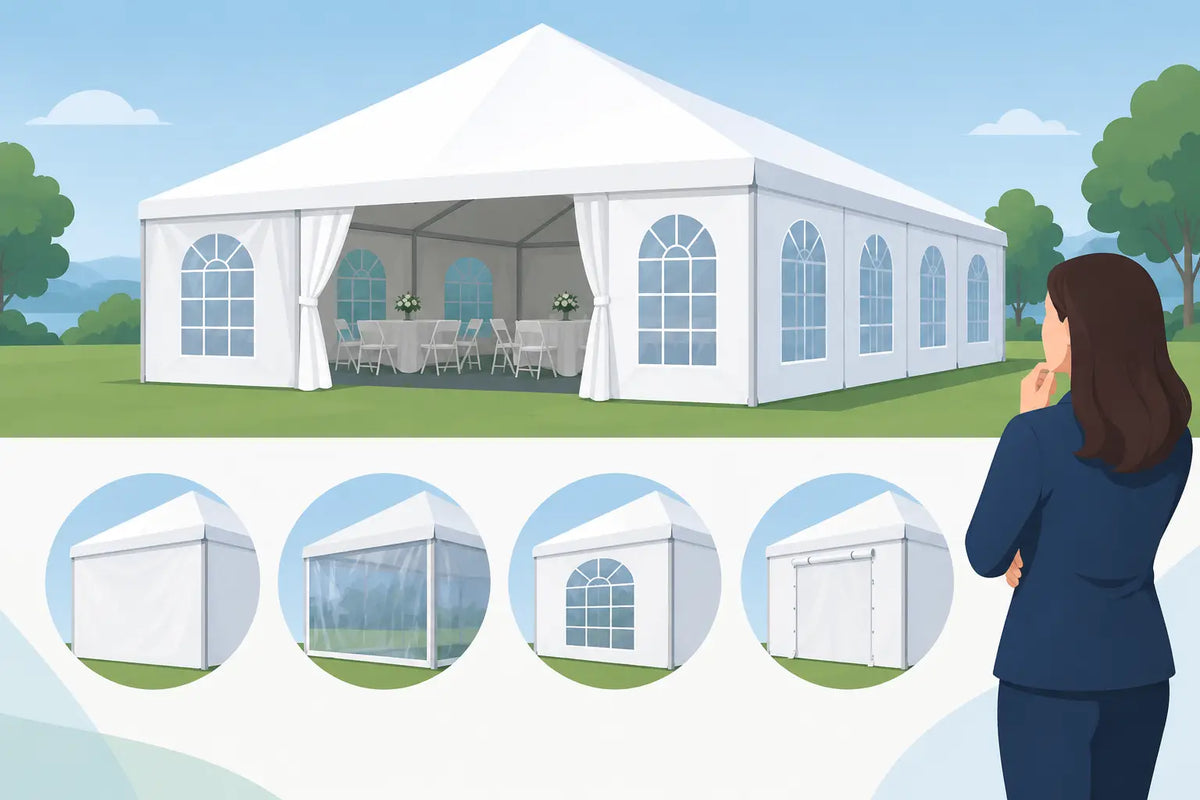
A tent without the right sidewalls can turn a polished event installation into a weather problem, a comfort problem, or an operational delay. When you choose commercial tent sidewalls, the decision should start with the tent system, event conditions, and how often the equipment will be installed, cleaned, transported, and rented again.
For rental operators, venues, caterers, and production teams, sidewalls are working equipment. They define the usable space under the tent, protect inventory and guests, support temperature control, and affect the look of the installation from the street and from the guest table. Selecting the lowest-cost panel without confirming fit, material, and compliance can create expensive issues on site.
Start With Tent Compatibility
Commercial sidewalls must match the tent frame, leg spacing, eave height, and attachment method. A wall that is the correct length but uses the wrong buckle, clip, keder edge, or lacing system is not a practical substitute. Even small differences between tent manufacturers can affect how the wall hangs, seals, and performs in wind.
Confirm the tent series before ordering. Record the tent width, side length, leg spacing, eave height, fabric type, and the existing wall attachment hardware. A 10-foot-wide section is common, but it is not a universal standard. Some systems use 8-foot, 15-foot, or custom bay lengths. Clearspan and frame tent systems may also require different wall profiles around hip ends, gables, doors, or leg locations.
For a rental fleet, standardizing around compatible wall sections has a clear operational payoff. Crews can load predictable quantities, replace damaged panels quickly, and configure different layouts without relying on improvised hardware. If you are adding walls to an existing tent inventory, compare physical samples or manufacturer specifications before making a fleet-size purchase.
Choose Commercial Tent Sidewalls by Event Use
The best wall configuration depends on what is happening inside the tent. A corporate dinner, a wedding reception, a ticketed festival, and a temporary catering tent have different priorities.
Solid white sidewalls are the practical starting point for many applications. They provide privacy, block wind, reduce visual distractions, and create a clean backdrop for lighting, décor, pipe and drape, or catering operations. They are especially useful when a tent is located near parking areas, service zones, or neighboring activity.
Window sidewalls bring in daylight and maintain sightlines, which can make a fully enclosed tent feel more open during daytime events. They work well for receptions, hospitality suites, and tented venues where the surrounding view is part of the experience. The trade-off is that windows reveal what is outside the tent and can create glare or solar heat gain in certain orientations.
Cathedral window panels offer a more formal visual profile and are often selected for weddings and upscale social events. They should be viewed as a presentation feature, not a replacement for a weather plan. If rain, wind, or late-day sun is expected, a mixed inventory of solid and window walls gives crews more options.
Mesh sidewalls are useful when airflow matters more than complete enclosure. They can help limit insects while allowing ventilation, making them a practical choice for food service, warm-weather gatherings, and seasonal installations. Mesh does not provide the same rain or wind protection as vinyl, so it should be specified with realistic expectations.
Plan for Weather, Not Just the Forecast
Sidewalls are often added because rain is in the forecast, but wind direction and temperature can matter just as much. A tent open on the windward side can become uncomfortable even on a dry day. Enclosing every side may reduce airflow and increase heat, especially when guests, catering equipment, and lighting are already producing warmth.
A flexible wall package lets crews respond to conditions at the site. For example, solid walls can block the prevailing wind, window walls can preserve the guest-facing view, and open bays can provide cross-ventilation. This approach is generally more useful than treating every event as either fully open or fully enclosed.
Do not assume sidewalls make a tent suitable for severe weather. They do not replace proper anchoring, ballast, structural engineering, evacuation planning, or local weather monitoring. In high wind, a wall can increase loads on the tent structure. Follow the tent manufacturer's instructions and the requirements of the authority having jurisdiction for the specific installation.
Specify Commercial-Grade Fabric and Construction
For repeated rental use, commercial vinyl sidewalls should be evaluated beyond color and price. Fabric weight, reinforcement, weld quality, hardware strength, and cleanability all influence service life. Panels are repeatedly folded, loaded, dragged across staging areas, exposed to sun, and cleaned after use. Weak seams and light-duty attachment points show their limits quickly.
Look for materials intended for commercial tent service, with reinforced edges and attachment hardware that can withstand regular setup. Heat-welded seams are commonly preferred for dependable water resistance and easier cleaning. If a panel will be used near food service, high-traffic entrances, or loading areas, consider how easily staff can remove marks and how the wall will look after repeated washing.
Fire resistance is another purchasing requirement, not an afterthought. Many event sites require tent fabric and sidewalls to carry recognized flame-resistance documentation. Requirements can vary by jurisdiction, venue, and event type, so retain applicable certificates with your tent records. A wall that cannot be documented may delay a permit inspection or force a last-minute replacement.
Build a Wall Mix Instead of Buying One Style
A balanced sidewall inventory usually performs better than purchasing all solid or all window panels. Your ideal mix depends on the work you book most often, but the goal is to cover common layouts without tying up capital in specialty panels that rarely leave the warehouse.
A practical commercial inventory often includes solid white panels for privacy and wind protection, window panels for guest-facing tent sides, door sections for controlled access, and a limited number of specialty options such as mesh or cathedral windows. Door walls deserve special attention. They help direct guest traffic, separate service access from public entry, and support heating or cooling strategies in enclosed tents.
Consider the panels that will be needed at corners and entrances. A tent can have enough linear wall footage on paper and still lack the correct pieces to create a useful layout. Map several of your most common tent configurations, including reception tents, storage tents, check-in areas, and catering enclosures, before setting quantities.
Account for Setup Time and Crew Handling
The right wall is also the one your crew can install correctly under event-day pressure. Attachment systems should be intuitive, secure, and consistent across the inventory. If walls require separate straps, loose clips, or adapters, those parts need to be counted, labeled, and replaced as part of the same system.
Sidewall handling affects labor costs. Large panels may reduce the number of seams, but they can be harder to fold, clean, and manage in wind. Smaller standardized sections are often easier for crews to deploy and replace, particularly when one panel is damaged during a busy weekend.
Storage is part of the decision as well. Vinyl must be dry and reasonably clean before long-term storage to reduce mildew, odor, and staining. Establish a return inspection process that checks windows for scratches, hardware for damage, and fabric for tears before panels go back onto the shelf. Keeping wall sections grouped by size, style, and tent series reduces loading errors on the next job.
Verify Site Requirements Before You Order
Venues, municipalities, schools, and public-event locations may have requirements affecting tent enclosure, exits, fire documentation, and occupancy. A fully sidewalled tent can be treated differently from an open canopy, particularly when it includes lighting, flooring, heating, cooking equipment, or large guest counts.
Plan clear exit routes and avoid using sidewalls in a way that narrows access or blocks emergency egress. If you use tent heaters, review ventilation requirements and manufacturer guidance for the heating equipment and the tent. For food preparation, identify where service walls, handwash areas, and delivery access will be located before the tent is installed.
For operators serving varied venues, keep product specifications and certification records accessible to office staff and field crews. That preparation helps when a client, venue manager, or inspector needs an answer quickly.
Purchase for Replacement and Growth
Sidewalls are among the tent components most likely to need replacement over time. Window panels can be scratched, white vinyl can stain, and attachment points can wear after repeated tension and transport. Ordering a few matching replacement sections with an initial purchase can prevent a discontinued style or production variation from becoming a problem later.
Before placing a large order, review current inventory, upcoming bookings, and the tent sizes that generate the most revenue. Buy enough wall coverage to protect your core tent packages first, then add specialized styles based on documented demand. Special Event Sales can help professional buyers compare commercial tent components and build an order around the tent systems already in service.
The most useful sidewall package is not the one with the most panels. It is the one that lets your team close a tent confidently when conditions change, present a clean guest environment, and return the equipment to service without creating extra work for the next event.